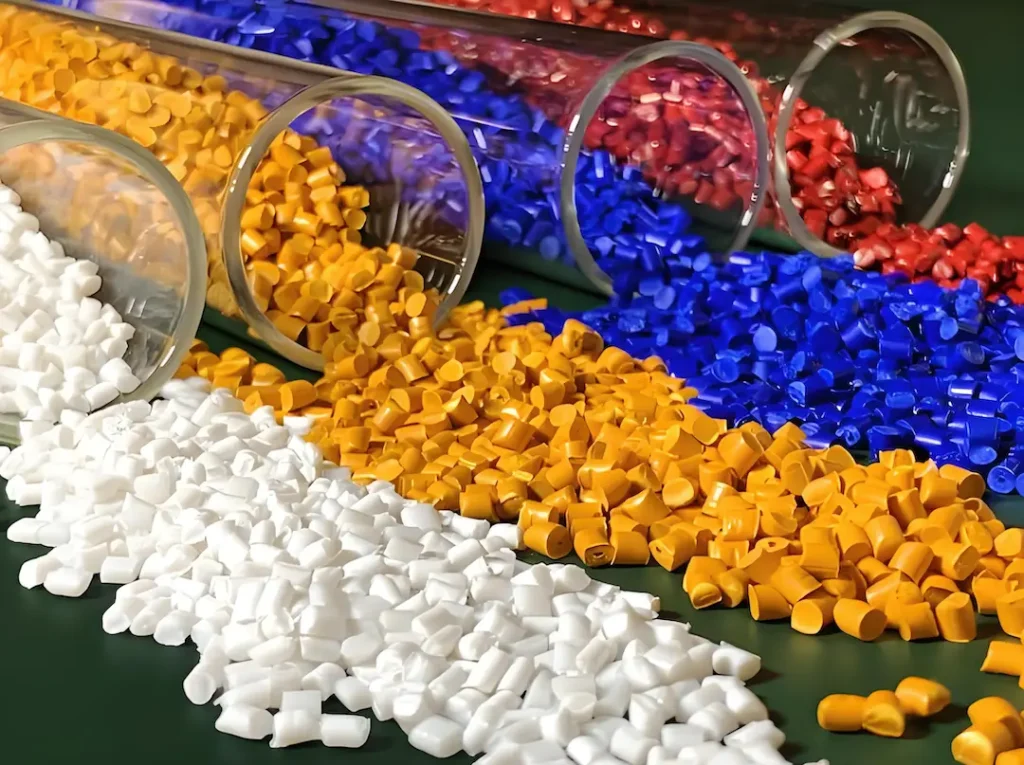
Film masterbatch sets how a film handles, looks, and performs: how it winds and unwinds, how clear it stays, how it resists flame or UV, and what color it carries. Able Materials is a film masterbatch manufacturer in China, with BOPET and polyester film as its core segment and other film types reviewed project by project. Every grade is formulated for your film structure, thickness, and line, and sits alongside the fiber and color families in our masterbatch product range.
Film Types We Supply Masterbatch For
Carrier choice comes first, because the masterbatch must melt and disperse evenly in the base film resin at line temperature.
| Film type | Carrier | Status | Typical uses |
|---|---|---|---|
| BOPET / polyester film | PET | Core capability | Packaging, labels, optical, electrical, release, window film |
| BOPA film | PA6 | Project review | Barrier packaging, retort and vacuum pouches |
| BOPP film | PP | Project review | Packaging, labels, tape |
| Blown and cast film | PE / PP | Project review | Packaging and industrial film |
BOPET and polyester film (core capability)
Biaxially oriented polyester film puts the highest demands on a masterbatch. Particles must be fine and evenly spread so that film stays clear and does not break during stretching, and the PET carrier must match the base resin’s viscosity. Grades cover thin packaging film through to thick electrical and optical film. Process requirements, application segments, and quality controls for this film type are detailed on our BOPET film masterbatch page.
BOPA and BOPP film (on project review)
Biaxially oriented nylon and polypropylene films need carriers matched to PA6 or PP and to their orientation conditions. Send the resin grade, line type, and target function, and we will confirm whether a suitable formulation can be developed before sampling.
Blown and cast packaging film
Blown and cast PE or PP packaging films use color, anti-block, and slip masterbatch in mono-layer or co-extruded structures. These projects are reviewed case by case against the film structure, layer ratio and converting steps.
Functional Film Masterbatch Options
Functional film masterbatch adds a defined surface, safety, or optical property. Targets are agreed per project and measured on finished film, not on pellets.
Anti-block, slip and release
Anti-block grades keep film layers from sticking on the roll. Slip grades lower the coefficient of friction (COF) so film runs smoothly over rollers and packaging machines. Release grades help film separate cleanly from coated or adhesive surfaces. For polyester film, see our BOPET anti-block masterbatch and slip and release grades for BOPET.
Flame-retardant
Flame-retardant film masterbatch is used in electrical insulation, electronics, and building films. Halogen-free options are available where the end market restricts halogenated chemistry. The target rating, such as UL 94 VTM or V classes, is agreed first and tested on your finished film thickness. Polyester-specific options are on our flame-retardant BOPET masterbatch page.
Optical and MLCC release film grades
Optical films and MLCC (multilayer ceramic capacitor) release films need very low particle contamination, tightly controlled surface roughness and low haze. These grades are built with clean carriers and tight particle-size control. Specifications and testing are covered under masterbatch for optical and MLCC release film.
Color and color + additive combinations for film
Color grades include black for light blocking, white for printing and photovoltaic backsheets, colored and pearlescent effects, and matting grades for low-gloss surfaces. Color can be combined with UV-barrier, anti-weathering or reflective function in one masterbatch, which reduces the number of dosing points on the line.
What Film Converters Specify
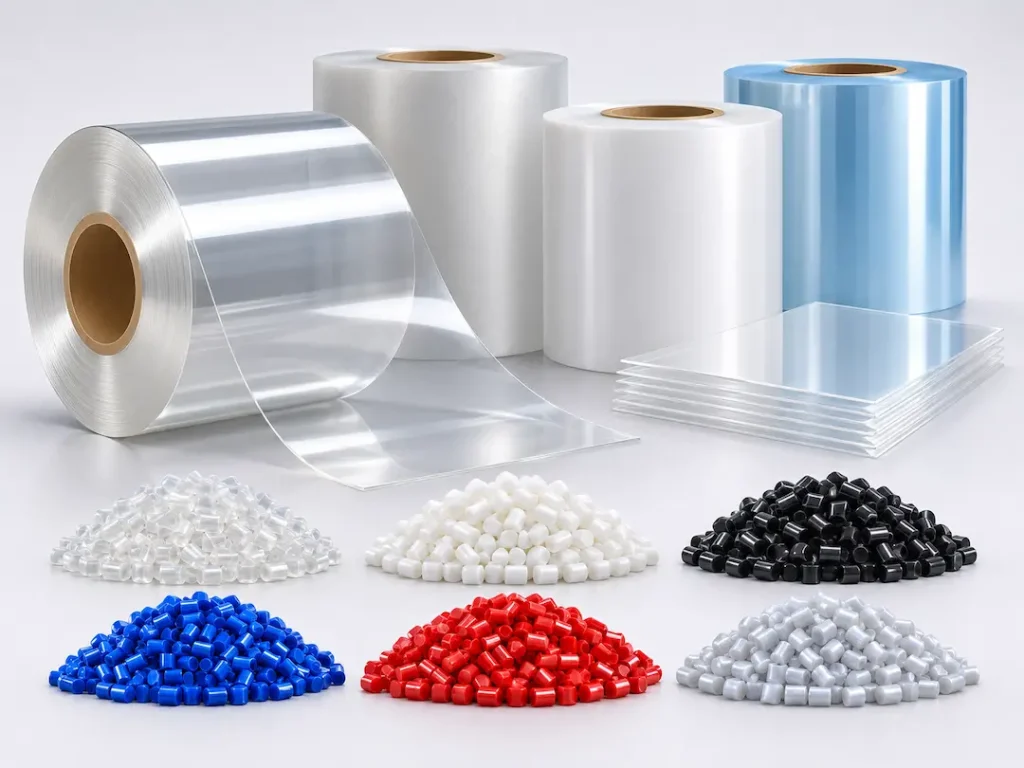
A clear specification shortens sampling. As a custom film masterbatch supplier in China, our Suzhou development team reviews these points before the first sample is made.
Film type, thickness, and line conditions
- Film type and structure: mono-layer or co-extruded, with layer ratio
- Thickness range, from thin packaging film to thick insulation film
- Line type: sequential or simultaneous biaxial orientation, blown or cast
- Base resin grade, extrusion temperature and filter mesh
- Downstream steps: printing, metallizing, coating, laminating or heat sealing
Haze, COF and purity targets
Most film projects balance competing targets:
- Haze and clarity: anti-block particles and pigments raise haze, so particle size and loading are tuned to your haze limit.
- COF: static and dynamic COF targets, measured to ASTM D1894 or ISO 8295, set the slip level.
- Purity: gels, black specks and oversized particles limit yield in optical and electrical film. Allowed levels are agreed per grade.
- Function: flame rating, UV transmission or dielectric properties, with the test method named.
Batch release checks and documents are described in our film-grade quality and documentation overview. Typical trial orders are 100–500 kg, and production MOQ is typically 500–1,000 kg depending on carrier resin and formulation.
FAQ
How much film masterbatch is usually added?
It depends on the function and film thickness. Color masterbatch typically runs at about 1–5%, while anti-block and slip grades often run at lower levels, and thinner films usually need more additive than thicker ones. The final rate is set in a line trial against your haze and COF targets.
Does slip masterbatch affect printing, metallizing, or heat sealing?
It can. Migrating slip agents move to the film surface over time, and too much can reduce ink adhesion, metal bonding, or seal strength. Slip type and loading are chosen with your converting steps in mind, and non-migrating options can be reviewed where print or seal performance is critical.
Can film masterbatch be used for food-contact packaging?
Only grades documented for food contact should be used, and compliance is confirmed per product code. That means checking FDA 21 CFR rules for the US, EU Regulation 10/2011 for Europe, and migration testing on the finished film. We review food-contact requirements per SKU and do not treat any grade as approved by default.
Why use masterbatch instead of powder additives or a pre-compounded resin?
Masterbatch arrives as pre-dispersed pellets, so it doses accurately, handles cleanly, and spreads evenly through the melt. One base resin can then serve several film specifications just by changing the masterbatch blend. A full compound removes dosing but locks in one formulation.
Can masterbatch be added only to the skin layers of a co-extruded film?
Yes, and it is common. Anti-block, slip, and release masterbatch is usually needed only in the outer layers, where the film touches rollers, other film or coated surfaces. Dosing only the skin layers lowers additive use and keeps the core layer clearer.
Request a Film Masterbatch Quote
To quote a film masterbatch project, send us:
- Film type, structure, and thickness
- Base resin grade and line type
- Required function and color (COF, haze, flame rating, UV, dielectric, color reference)
- Test methods and pass levels
- Downstream steps: printing, metallizing, coating, laminating or sealing
- Trial quantity, annual volume and destination country
Our technical team will review feasibility and propose a sampling route. Send your film specification to start the review.