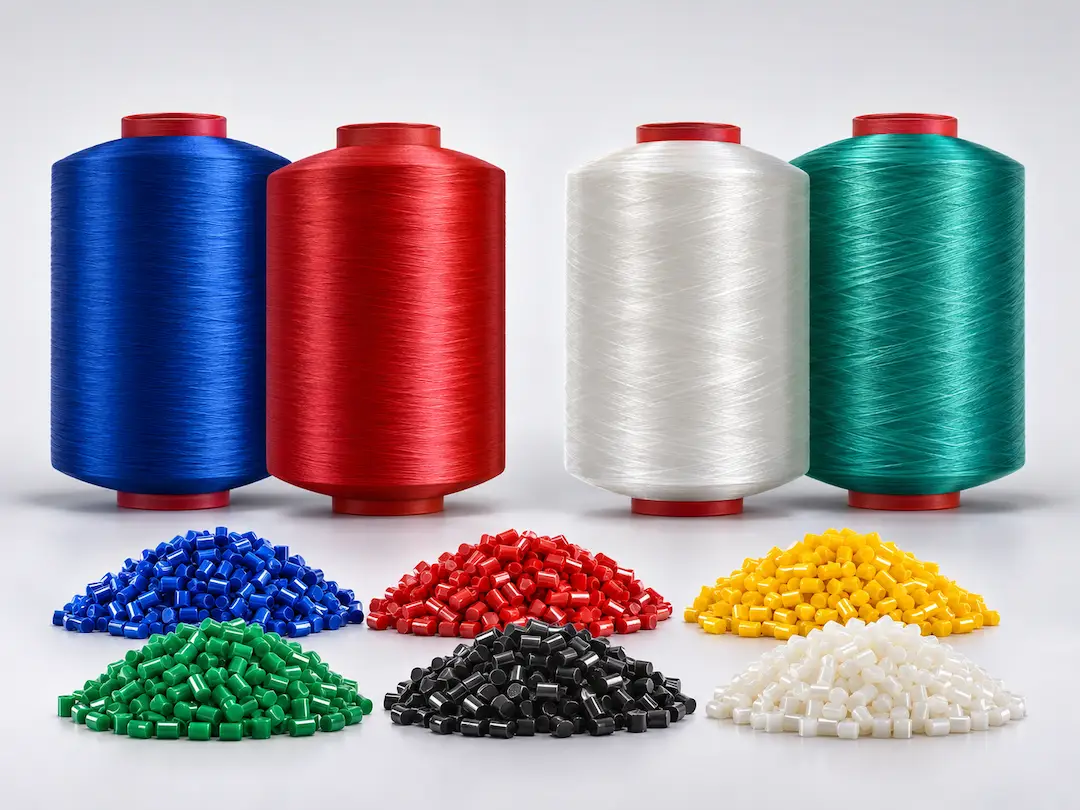
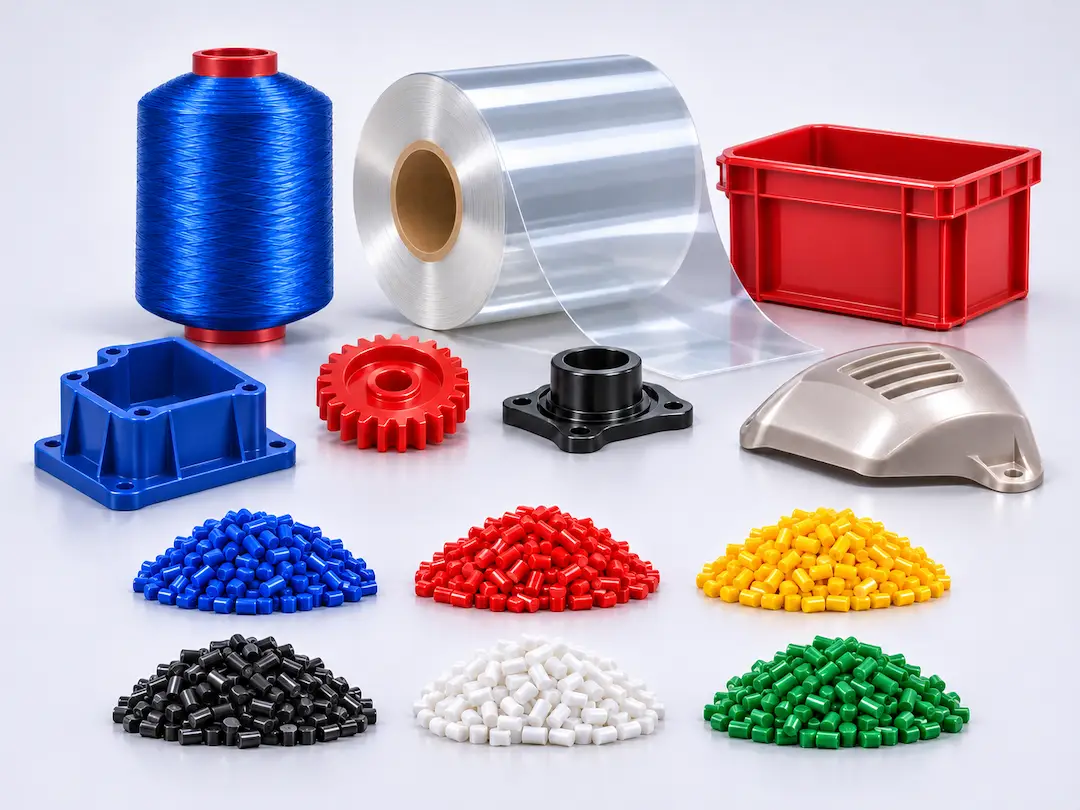
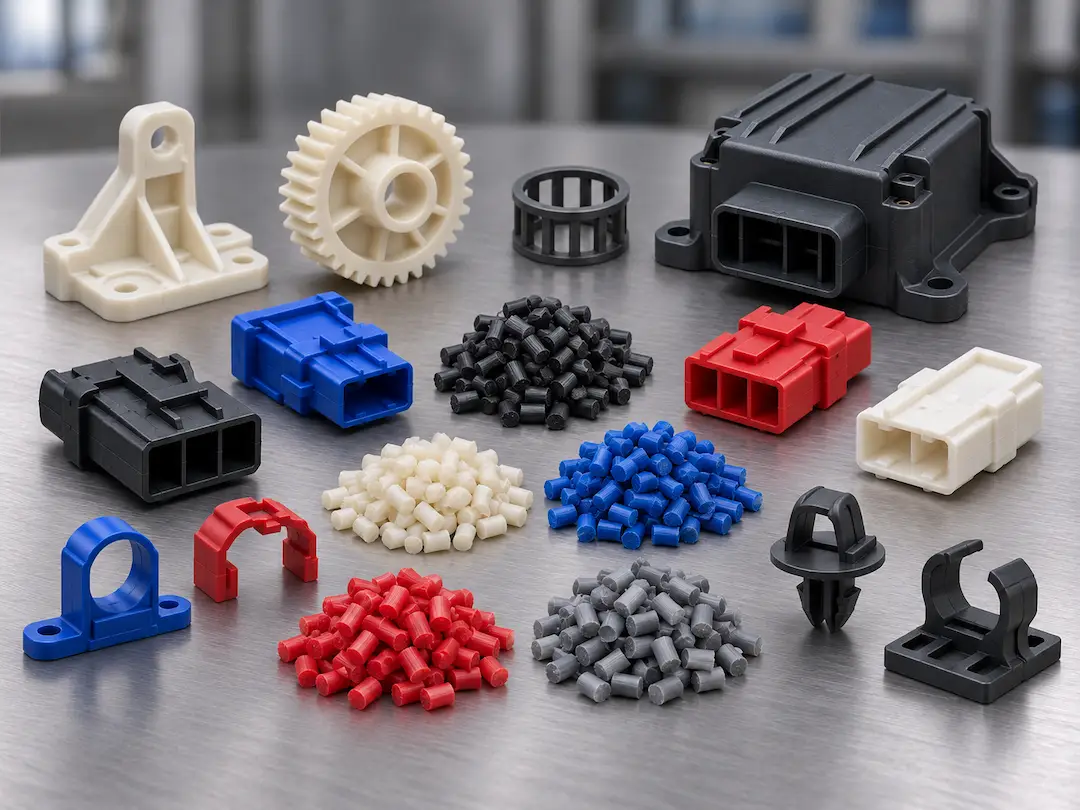
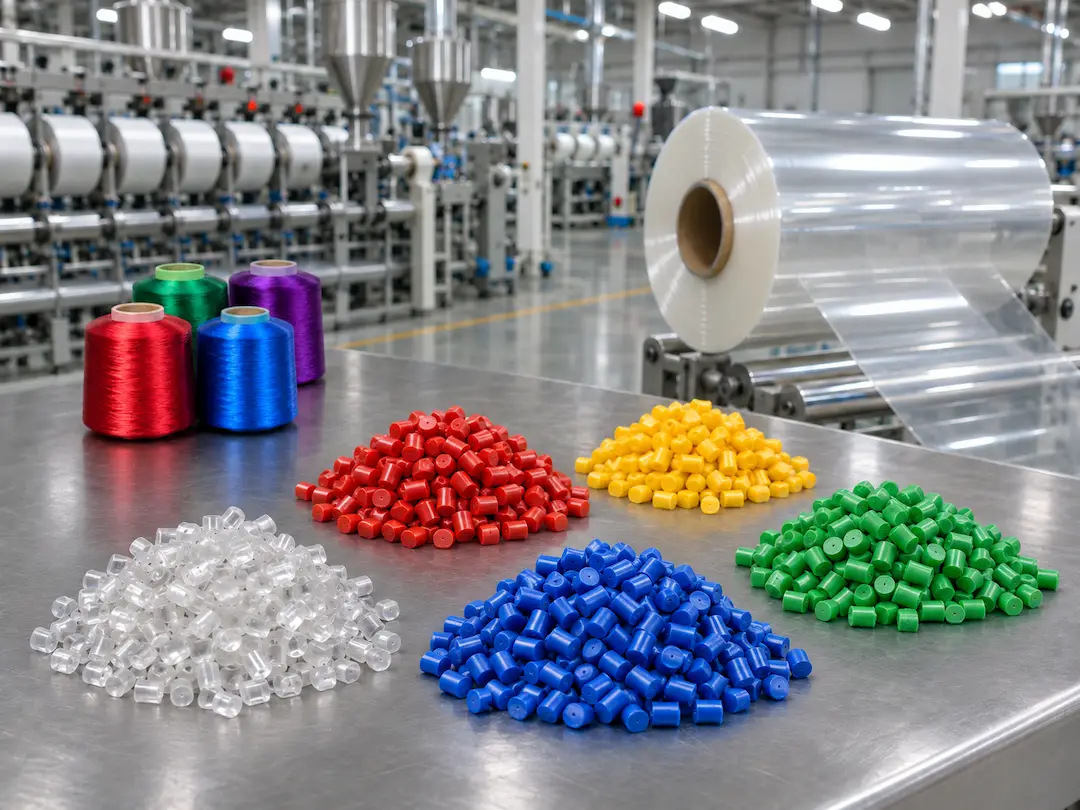
PA masterbatch is a pigment or additive concentrate built on a polyamide-compatible carrier, used to color or modify nylon fibers and engineered plastic parts. Able Materials develops custom PA masterbatch as a supplier and manufacturer in China, covering both PA6 and PA66 for nylon fiber, carpet yarn and injection-molded components.
Polyamide is a demanding host polymer. It absorbs moisture, runs at high melt temperatures, and is often combined with glass fiber or flame-retardant packages that change how color and additives behave. A PA masterbatch has to be designed around those realities, not adapted from a polyester or polyolefin grade.
PA6 vs PA66 Carriers
PA6 and PA66 are both nylon, but they differ enough that a masterbatch formulated for one is not automatically right for the other. The carrier and pigment package are selected for the specific resin.
| Property | PA6 | PA66 |
|---|---|---|
| Typical melt point | ~220 °C | ~260 °C |
| Processing window | Lower; more forgiving for sensitive pigments | Higher; requires more thermally stable pigments and additives |
| Common uses | Textile and carpet fiber, films, molded parts | Technical yarn, automotive and electrical parts |
| Moisture uptake | High | High, slightly lower than PA6 |
Processing temperature and compatibility
The higher PA66 processing temperature narrows the choice of pigments and additives, since some organic pigments and flame-retardant systems decompose before PA66 melts fully. A masterbatch for PA66 is therefore tested at the real melt temperature of your line, not extrapolated from PA6 behavior. Carrier resin is chosen to melt and blend within your processing window so it disperses without degrading the base polymer.
Moisture sensitivity and drying
Polyamides are hygroscopic. Wet resin causes hydrolysis, bubbles, splay, and loss of mechanical properties, and wet masterbatch carries the same risk into the melt. PA masterbatch is supplied dry in moisture-protective packaging and should be dried to the same conditions as the base resin where required, with drying parameters confirmed per grade. Keep bags sealed until use.
PA Color Masterbatch
PA color masterbatch is the larger part of our polyamide work, split between fiber and engineered plastics.
Dope-dyed nylon fiber colors
Dope-dyed nylon fiber is colored in the polymer melt before spinning, so shade is uniform through the filament. This suits carpet yarn, automotive textiles and outdoor fabrics where fastness matters. Pigments need heat stability at nylon spinning temperatures and fine dispersion to keep filtration pressure and filament breaks under control. We match to physical yarn samples, Pantone or RAL references, or spectral values. Fiber-specific grades are on our nylon fiber masterbatch page.
Engineering-plastic color matching
For molded PA parts, color is matched on the resin you actually use. Glass-filled, mineral-filled and flame-retardant PA grades each change base color and opacity, so a recipe that works in natural PA6 may need adjusting in a filled grade. A physical part or chip in the target polymer gives the most reliable match. For the wider color workflow, see custom color masterbatch.
PA Functional Masterbatch
PA functional masterbatch adds a property to the polymer: protection, safety or functionality for the end part.
Flame-retardant, antibacterial and UV grades
- Flame-retardant: Halogen-free systems for electrical and automotive components and technical textiles, assessed by methods such as UL 94 where the application requires it.
- Antibacterial: Built-in antimicrobial additives for fiber modification. Efficacy is tested per project to the standard you nominate, and claims are limited to the test result.
- UV-resistant: UV stabilizers for fibers and parts exposed to sunlight, since unprotected nylon yellows and loses strength outdoors.
Combining these functions with color is possible, though additive loading can alter shade and mechanical properties and is balanced during development. See the cross-polymer functional masterbatch capabilities for the full function range.
Antistatic, conductive and laser-marking grades
Antistatic and conductive grades reduce static build-up in carpet yarn, technical textiles and electronic housings. Conductive systems often use carbon-based fillers, which limit color choice to dark shades. Laser-marking grades let a laser produce high-contrast marks on PA parts, used for identification and traceability. Each grade is verified on your part geometry and laser settings.
PA Masterbatch by Application
The same polymer family serves very different products, and the masterbatch is specified for the application and process.
Nylon fiber and carpet yarn
Nylon fiber and carpet yarn is the main PA application, using color, UV, antistatic and flame-retardant grades. Requirements include color fastness, spinning stability and regular dosing. Read more on PA6 and PA66 fiber masterbatch, and see applications such as automotive interior textiles.
Injection-molded engineering parts
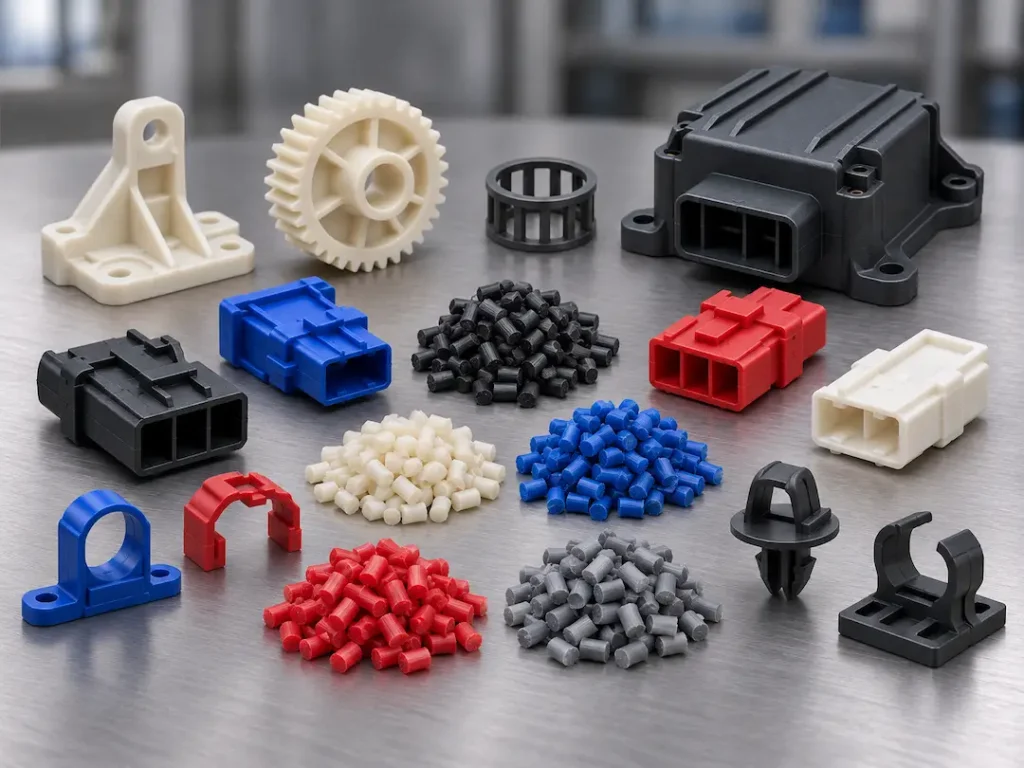
For injection molding, masterbatch is added at the press or during compounding to color or modify parts such as housings, connectors and under-the-hood components. Key factors are dispersion, thermal stability in the barrel, shot-to-shot color consistency and compatibility with fillers such as glass fiber.
Residence time matters as much as set temperature. Long barrel dwell on PA66 can darken or shift pigments that are stable at normal cycle times, so recipes are checked against your cycle and shot size. Sprue, runner and regrind recycling can also change color over repeated passes, which is worth flagging in the RFQ. Typical order stages run from a 5–25 kg lab sample to a 100–500 kg trial, then production.
BOPA film on project review
Biaxially oriented polyamide (BOPA) film is considered on project review. Film thickness, stretch ratio and surface requirements make this a case-by-case development; send the film specification and we will confirm feasibility before sampling.
FAQ
What is the difference between PA masterbatch and nylon masterbatch?
None in chemistry: nylon is the common name for polyamide. “Nylon masterbatch” is the usual term in textiles, while “PA masterbatch” is more common for engineering plastics. The specific resin, PA6 or PA66, should always be stated.
Can a PP or PE carrier masterbatch be used in nylon?
It is not recommended. Polyolefin carriers are poorly compatible with polyamide and can cause poor dispersion, delamination or reduced mechanical properties. A PA-compatible carrier avoids these problems.
Can PA masterbatch be used in glass-fiber reinforced nylon?
Yes, color and functional masterbatch can be developed for glass-filled PA. The filler changes base color and can affect additive performance, so the recipe is matched on the filled grade.
What is the minimum order for PA masterbatch?
Lab samples are 5–25 kg and trial orders are 100–500 kg. Production MOQ is typically 500–1,000 kg depending on carrier resin and formulation. Our custom masterbatch development process shows how these stages connect.
What documents come with PA masterbatch for exports?
A technical data sheet, safety data sheet and batch certificate of analysis are provided, with composition declarations or test reports where the project needs them. See our quality and technical documentation page.
Request a PA Masterbatch Quote
Send the resin (PA6 or PA66) and grade, filler or flame-retardant content, process (spinning, injection molding or film), color reference or target function, addition ratio, end application and expected volume. We will confirm feasibility and prepare a lab sample. Contact Able Materials to start a PA masterbatch project or explore the full masterbatch product range.