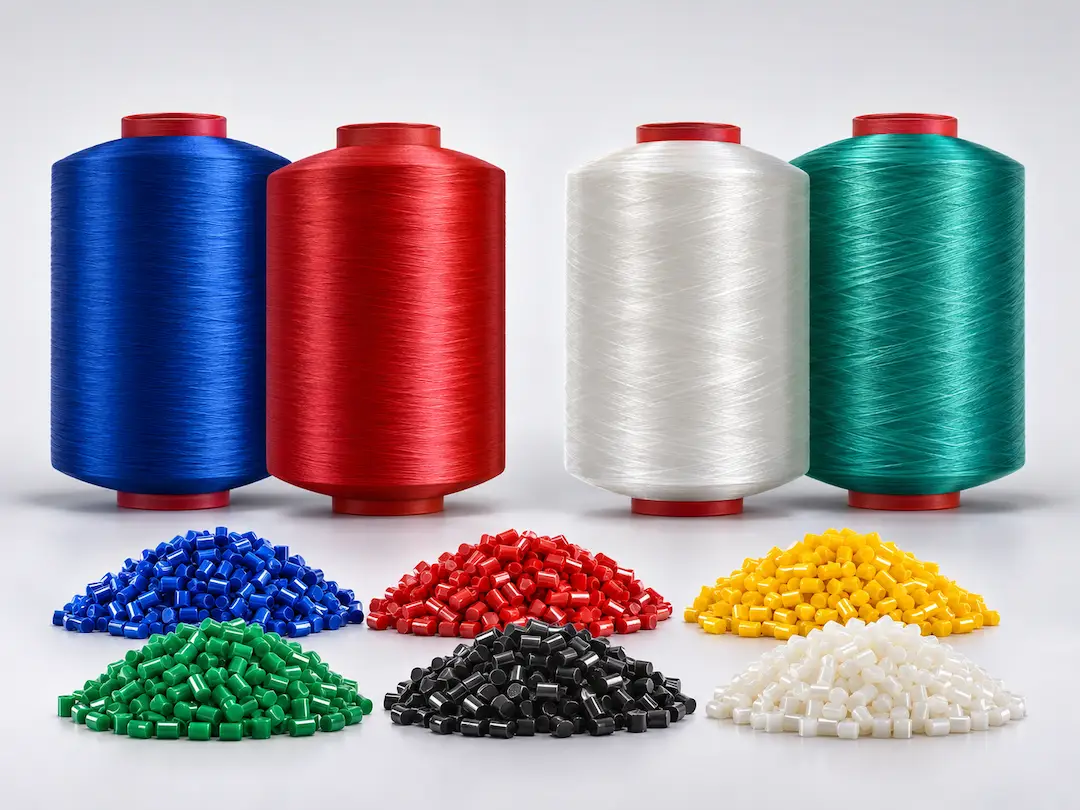
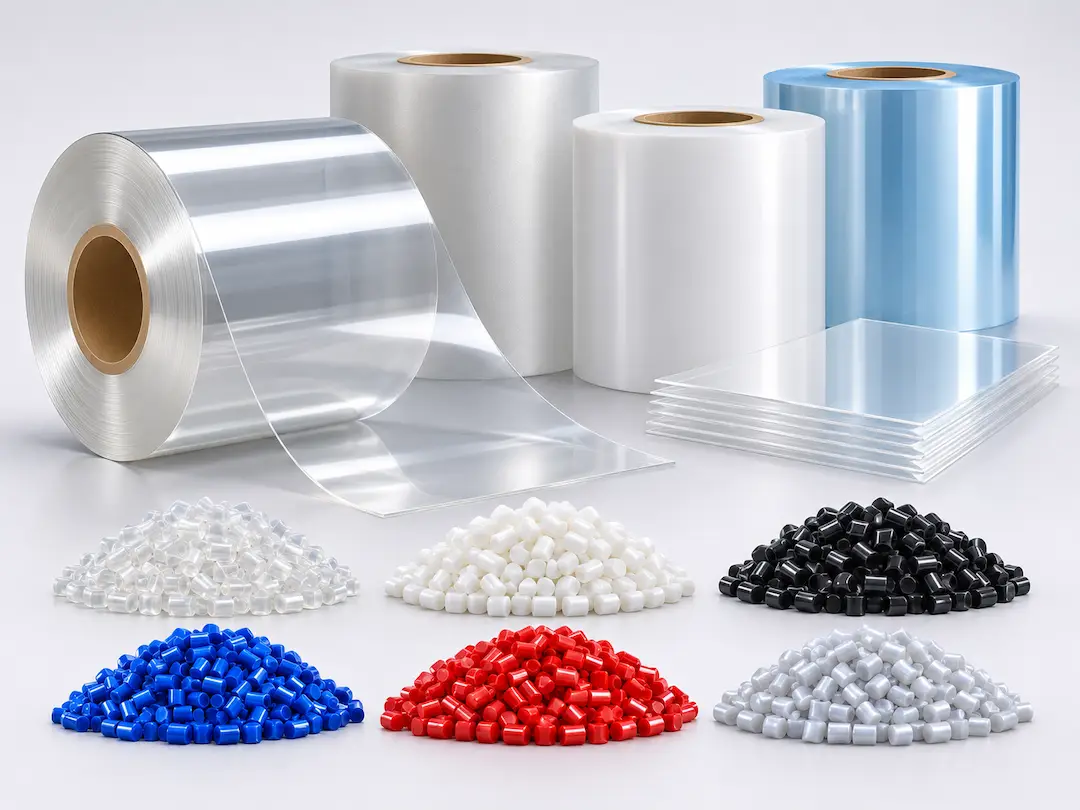
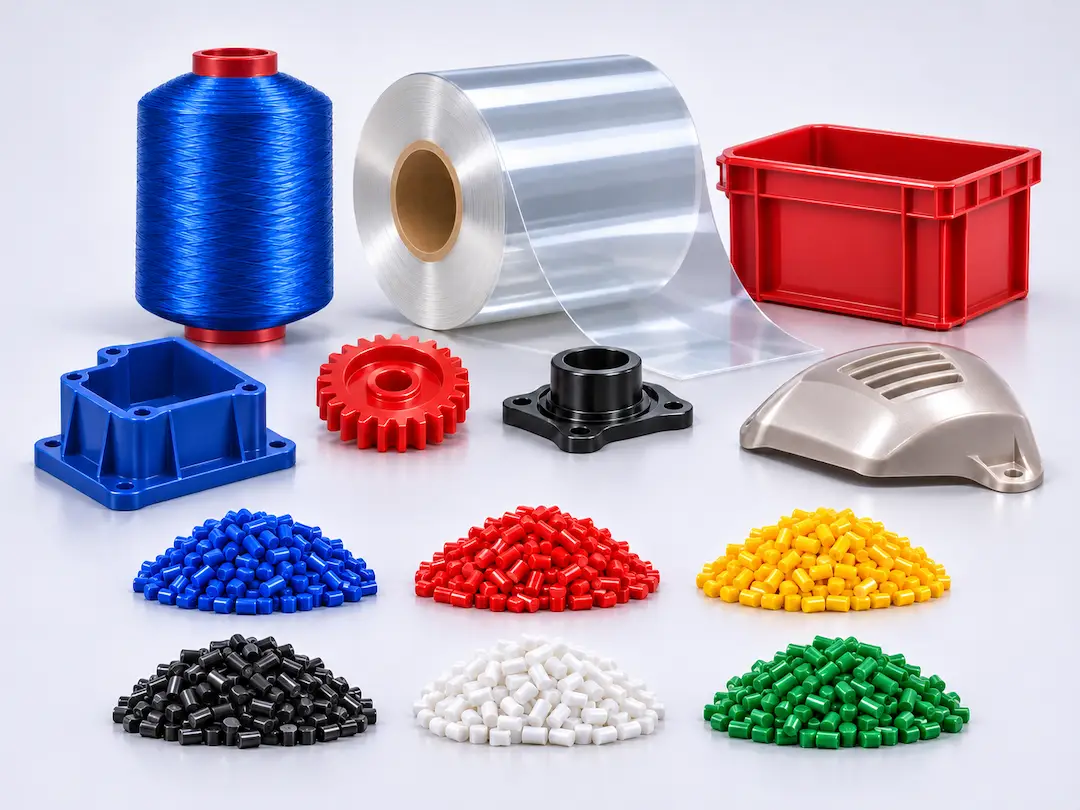
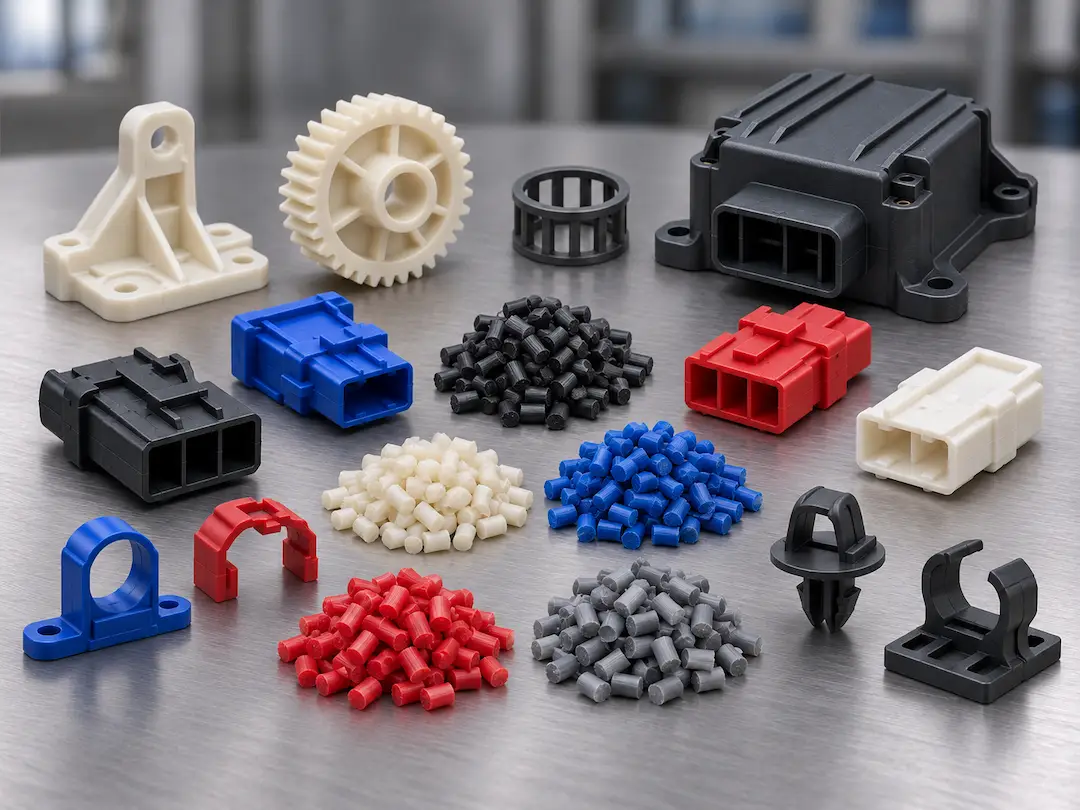
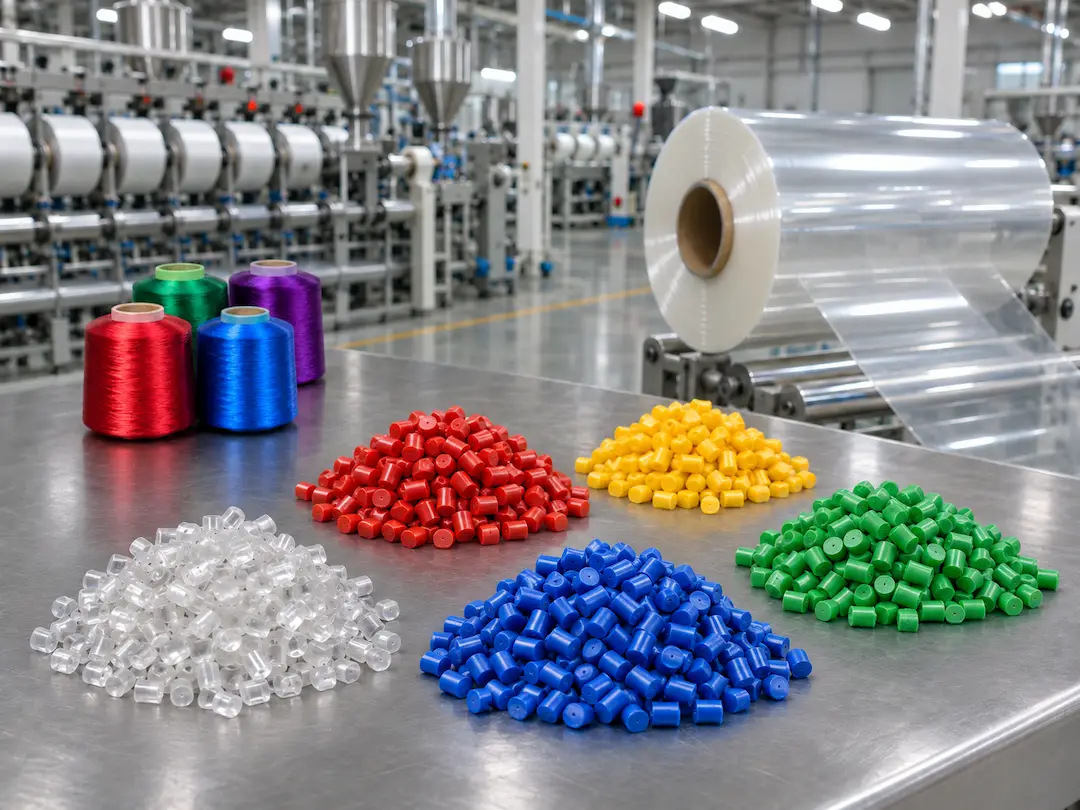
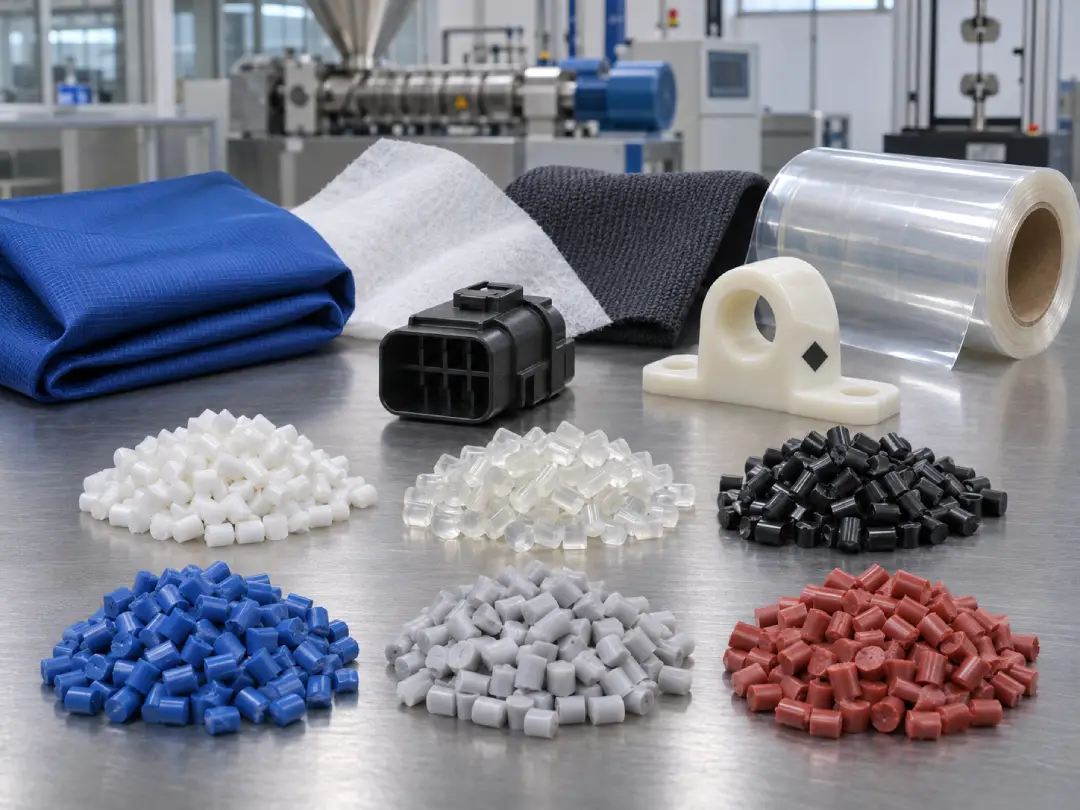
Masterbatch applications differ less by pellet than by what the finished product must withstand. A seat-fabric yarn, a BOPET capacitor film and a spunbond hygiene web can share a PET carrier, yet each has its own shade standard, test method and paperwork. Able Materials is a custom masterbatch manufacturer in China that develops color and functional masterbatches for fibers, films and selected plastics, and organizes that knowledge by industry so buyers can begin from their end product.
Choose the industry closest to your product below. Each page sets out what buyers in that sector specify and how we develop to it.
How We Organize Masterbatch by Industry
Industry requirements come first
Formulation starts from the end use: the process the masterbatch runs on, the performance target it must meet and the documents the customer’s program requires. The same carrier and additive families recur across sectors, but the dosing, test standard and approval route change with the industry.
That is why a UV package for outdoor fabric is not simply reused for an automotive carpet. The exposure conditions, the test hours and the acceptance criteria differ, and each is agreed before sampling.
How industry pages relate to product pages
Product pages describe what we make: fiber masterbatch, film masterbatch, color, functional, PET and PA grades. Industry pages describe what a buyer in one sector specifies and route to the product pages that supply it. If you already know the grade you need, start from the masterbatch product range.
Industries We Supply
Automotive interiors
PET and PA fibers, carpets and nonwovens used inside vehicle cabins. Buyers specify shade accuracy, lightfastness behind glass, flame performance and emission behavior, with color, UV, flame-retardant and antistatic grades most common. See automotive interior applications.
Technical textiles
Industrial yarns, performance fabric and workwear, where fastness, strength retention and consistent shade across lots matter. Functional options such as antibacterial or cooling grades are added to the color base as the specification requires. See technical textile applications.
Outdoor textiles
Awning cloth, shade fabric and outdoor furniture textiles that face sunlight and weather over long periods. Dope-dyed color and UV stabilization are the core combination, with service-life statements tied to the test method and hours agreed per project. See outdoor textile applications.
Packaging film
BOPET and polyester packaging and printing film, where surface behavior decides how the film winds, runs and converts. Anti-block, slip and color grades are the main requests, balanced against clarity. See packaging film applications.
Electrical and electronics
Flame-retardant and optical-grade BOPET film, antistatic and conductive materials, and laser-markable PA parts. Cleanliness, purity and flammability ratings dominate, and each is verified on the finished film or part. See electrical and electronics applications.
Nonwovens, hygiene and medical
Spunbond and staple-fiber nonwovens for hygiene products, medical textiles, filtration and wipes. Color, antibacterial and antistatic grades are typical, with skin-contact and medical-use documentation reviewed per project and market. See nonwoven, hygiene and medical applications.
Industry Overview at a Glance
The table summarizes where each industry usually starts. Reference standards are examples that buyer and supplier agree per project; none implies that a particular grade has passed or is certified to it.
| Industry | Main materials and processes | Typical masterbatch focus | Example reference points |
|---|---|---|---|
| Automotive interiors | PET and PA fiber, carpet, needle-punched nonwoven | Dope-dyed color, UV, flame-retardant, antistatic | FMVSS 302, OEM specifications |
| Technical textiles | PET and PA filament and staple | Color, antibacterial, cooling, UV | Fastness methods per project |
| Outdoor textiles | PET, PA and PP fiber | UV stabilization, dope-dyed color | ISO 105-B02, ISO 4892, ASTM G154 |
| Packaging film | BOPET, blown and cast film | Anti-block, slip, color | ASTM D1894, haze and gloss targets |
| Electrical and electronics | BOPET film, PA parts | Flame-retardant, optical-grade, antistatic and conductive, laser marking | UL 94, ASTM D257, IEC 62631-3 |
| Nonwovens, hygiene and medical | Spunbond PP and PET, staple nonwoven | Color, antibacterial, antistatic | AATCC 100, ISO 20743 |
What Buyers in Every Sector Need to Specify
Performance targets and test methods
A masterbatch brief is fastest to develop when it states the measurable target rather than the adjective. Useful inputs across all industries are:
- Base polymer and grade, and the process line it runs on
- Color reference: physical standard, Pantone or RAL, or spectral data
- Functional target with the test method your customer names
- Addition ratio, if one is already fixed
- Destination market and expected volume
Development then follows our custom masterbatch development process, from lab sample to trial order and production.
Documentation and regulatory scope
Every industry asks for some combination of technical data sheet, safety data sheet, batch COA and declarations, and some add regulatory questions such as food contact, antimicrobial claims or restricted substances. Routine documents are described on the quality and technical documentation page. Framework-specific limits are set out under regulatory and compliance support.
FAQ
Can one masterbatch formulation be used across several industries?
Sometimes the base color or additive system transfers, but the approval does not. The same pellet can face different processing temperatures, exposure conditions and test standards in a different sector, so each use is checked on a lab sample before a trial order.
Do you develop masterbatch for industries not listed here?
Yes, on project review. Other fiber, film and plastic uses, such as agricultural film or building textiles, can be assessed if the carrier polymer, process and target property fall within our PET, PA and film capability. Send the specification and we will confirm feasibility before sampling.
Does masterbatch need industry-specific certification?
Approvals such as flammability ratings, food-contact status or medical-use suitability apply to the finished product and its conditions of use. Masterbatch contributes documentation and test support to that process. Industry requirements are confirmed at feasibility stage, so you know what is needed before committing to samples.
What is the minimum order for industry-specific masterbatch?
Lab samples are 5–25 kg and typical trial orders are 100–500 kg. Production MOQ is typically 500–1,000 kg, depending on carrier resin and formulation. The order size is confirmed once the specification is known.
Request a Project Review
Tell us your industry, end product, base polymer, process, target color or function, the standards your customer names and your expected volume. Our team in Suzhou will confirm feasibility and propose a lab sample route. Request a custom masterbatch project review, or learn how we work with buyers on the Able Materials company page.