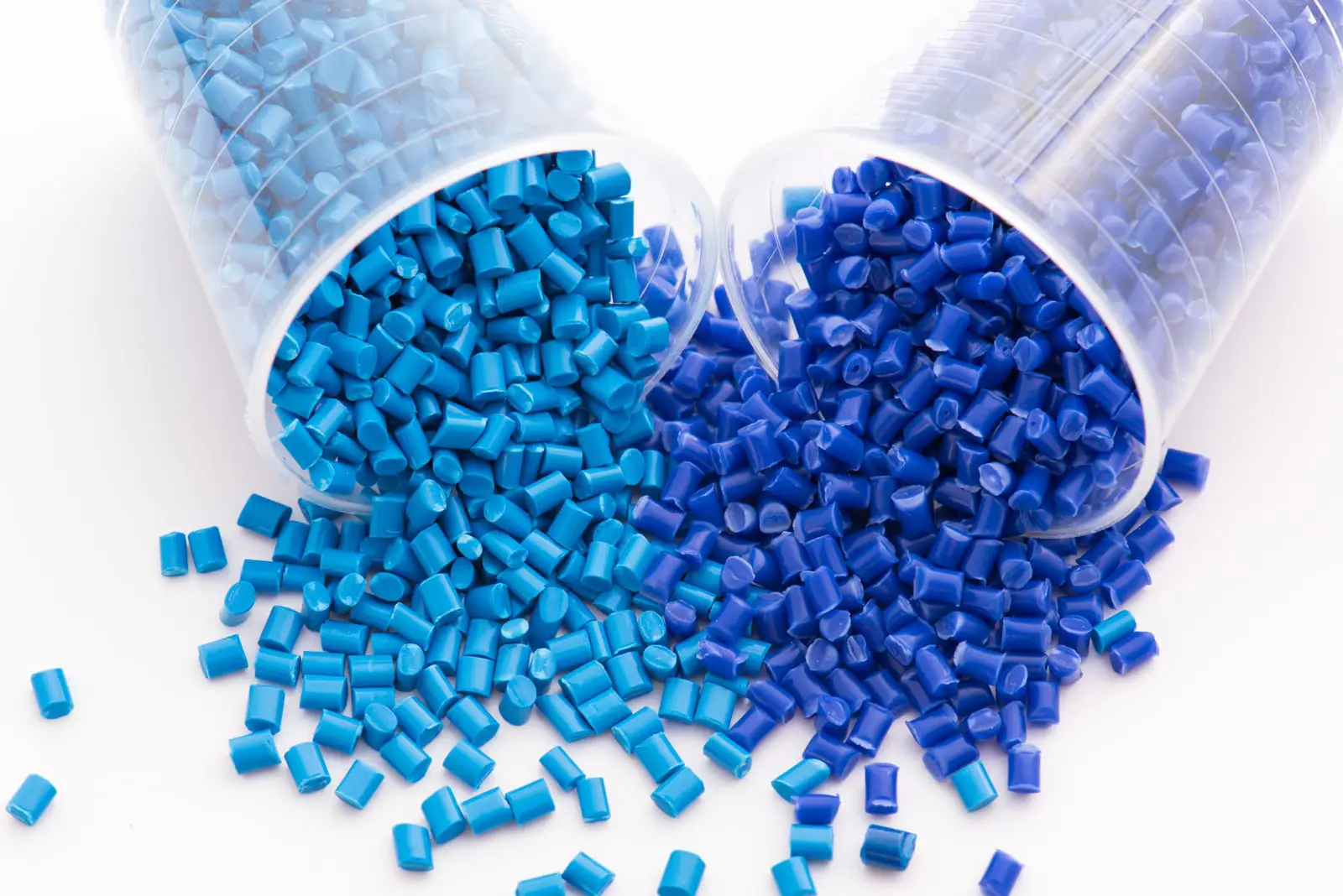
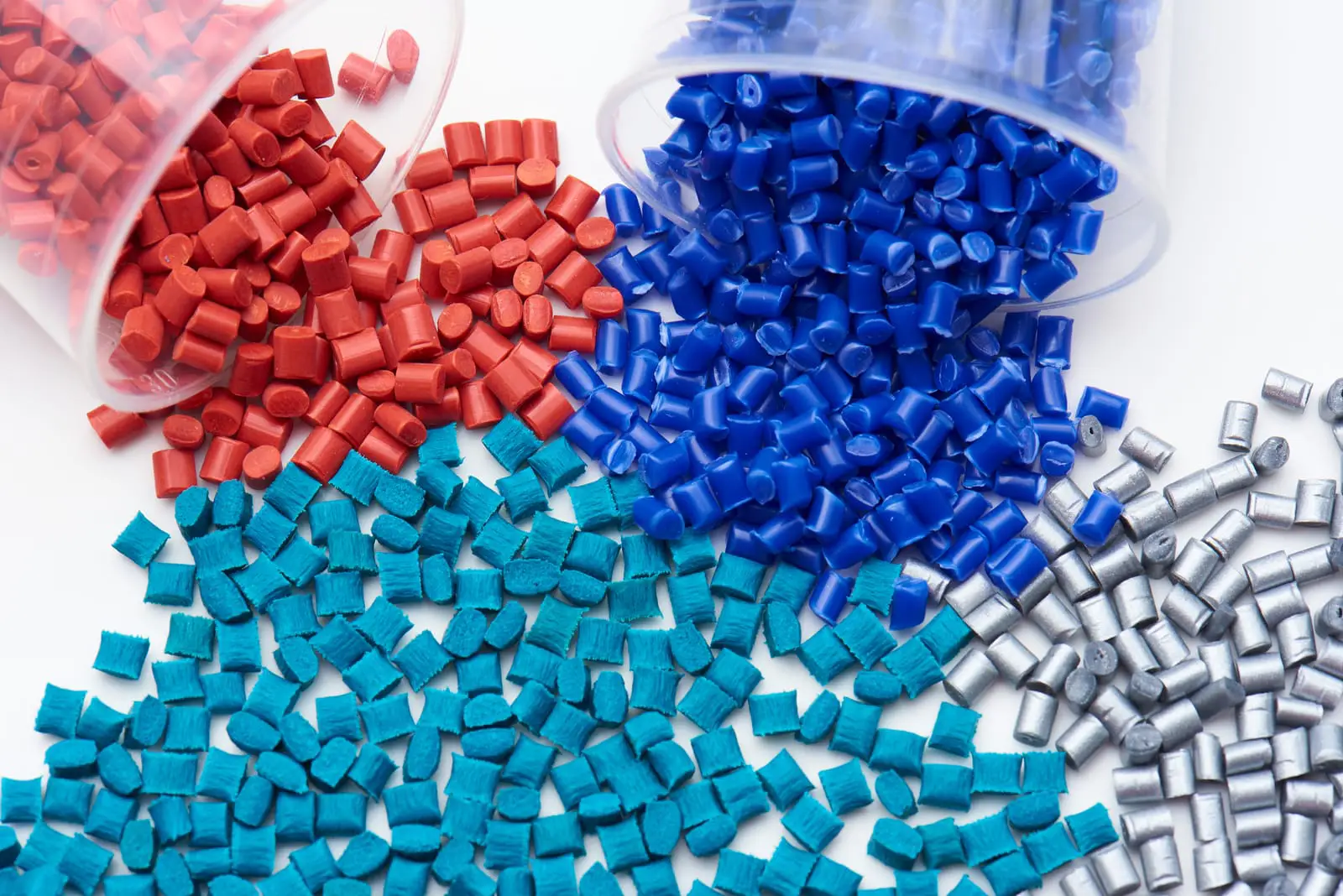
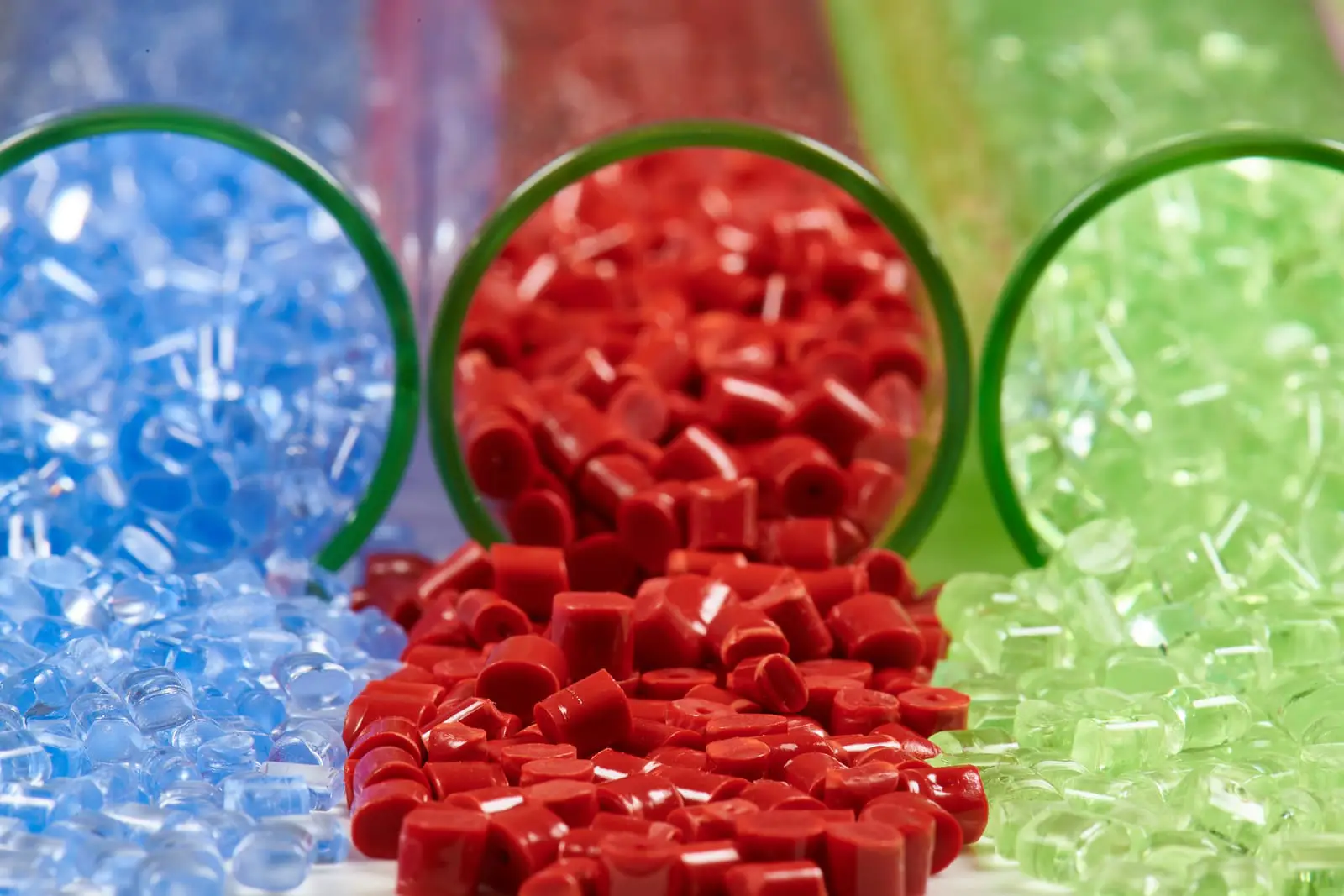
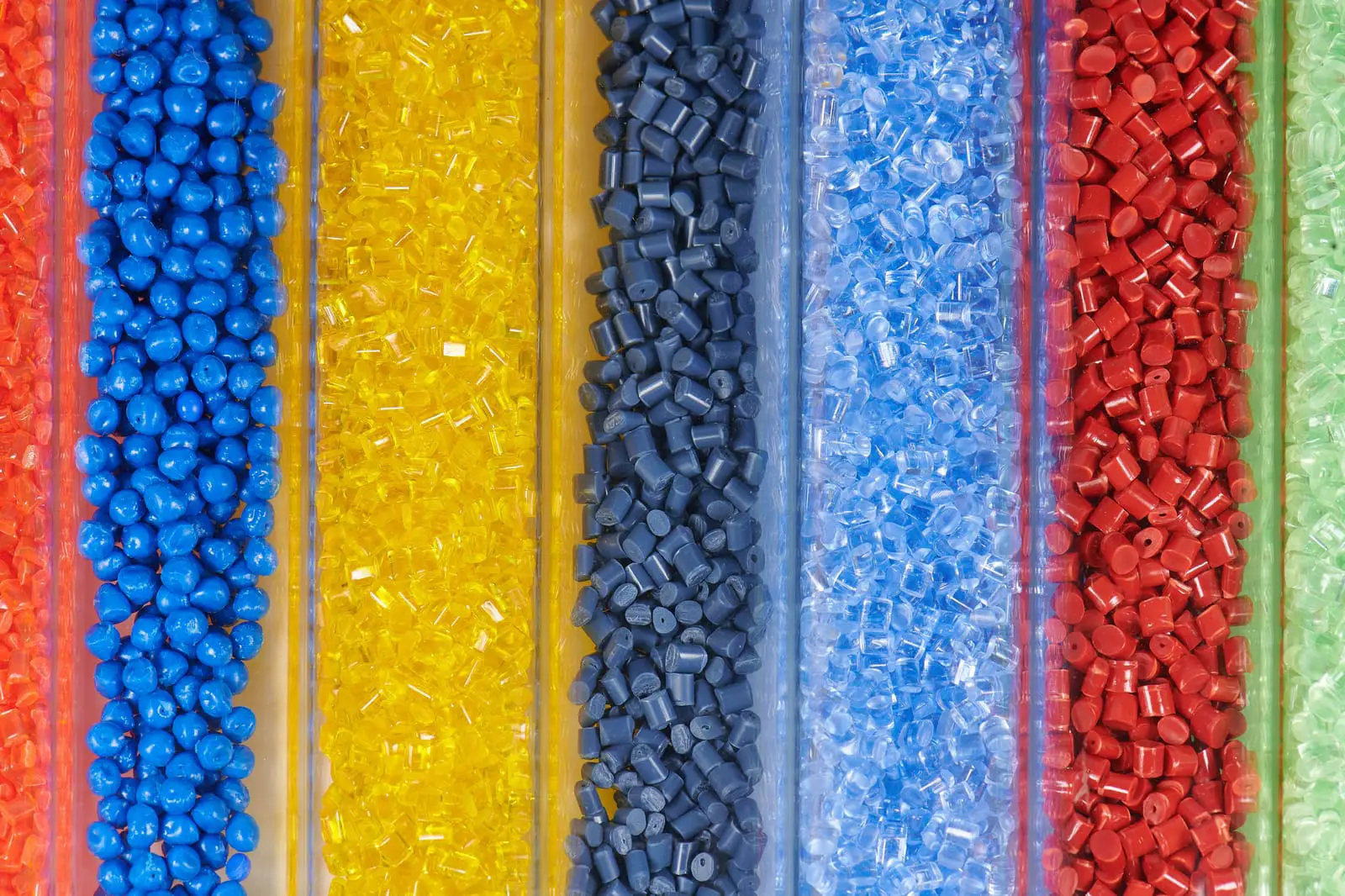
Flame-retardant fiber masterbatch carries a flame-retardant additive into polyester or nylon during melt spinning, so the function is built into the filament instead of applied afterward. As a flame retardant fiber masterbatch manufacturer in China, Able Materials develops PET and PA6/PA66 grades for automotive, contract and technical textiles. Each grade is set against the flammability standard the buyer’s market uses and sits within our fiber masterbatch range.
How Flame-Retardant Fiber Masterbatch Works
Phosphorus-based, halogenated and halogen-free systems
| System | How it acts | Consideration |
|---|---|---|
| Phosphorus-based | Promotes char formation and limits fuel release | Common halogen-free route; may affect shade and polymer viscosity |
| Halogenated, with a synergist | Interrupts combustion in the gas phase | Effective at lower loading; restricted in some markets |
| Nitrogen-based and synergists | Support phosphorus systems | Used in combination, not usually alone |
Selection depends on the polymer, spinning temperature, target standard and the buyer’s restricted-substance list.
Built-in FR vs back-coating and FR finishes
Back-coating and FR finishes are applied to fabric. They can stiffen the hand, add weight, and wear off through washing or abrasion. Built-in FR sits in the fiber, so it does not rely on a coating layer. The trade-off is that the flame-retardant loading must be balanced against spinnability, and the finished fabric still has to pass its own test.
How FR loading affects spinnability and fiber strength
Flame-retardant additives are loaded far higher than pigments. At high loading, filament breaks can increase and tenacity can fall, and some chemistries lower polymer viscosity. Fine particle size, good dispersion and a trial at the buyer’s denier and line speed are used to find a workable loading.
Halogen-Free Options
When buyers or markets require halogen-free
Halogen-free grades are specified when an OEM restricted-substance list, a retailer policy or an end-market rule excludes halogenated chemistry. They are also requested for public-space textiles where smoke and corrosive gases are a concern. The requirement is confirmed at the start of the project.
Performance and processing trade-offs
Halogen-free systems usually need higher loading for the same rating. That can narrow the color range, and some shades may require different pigment choices. It can also change melt behavior, which is why a lab spin trial comes before commitment to a formulation.
Supported Fibers and Processes
Polyester filament, staple and nonwoven
PET carriers suit POY, FDY, DTY, staple fiber and spunbond or needle-punched nonwoven, on chip-fed and direct-spinning lines. See our PET masterbatch page for carrier detail. Additives must stay stable at PET spinning temperatures, around 280–295 °C.
PA6 and PA66 yarn and melt-drip behavior
PA6 and PA66 grades are used for carpet, industrial yarn and textile filament. Nylon melts and drips when burning, which helps in some tests and hurts in others, so the target behavior is agreed before formulation. PA6 and PA66 also differ in melt temperature, and the carrier is matched to the grade.
Flammability Standards by End Use
Standards are references that buyer and supplier agree per project. No grade is described as passing a standard unless a test report exists for that grade and fabric.
Automotive interiors — FMVSS 302 and OEM specifications
Automotive textiles are commonly evaluated against FMVSS 302 or ISO 3795 for horizontal burn rate, plus OEM-specific tests. Requirements are confirmed against the OEM document, as they can differ by program. More automotive context is on our automotive interiors page.
Curtains and contract textiles — NFPA 701, BS 5867 and equivalents
Drapery and public-space fabrics are tested to NFPA 701 in North America and BS 5867 in the UK, or to regional equivalents. These tests are strongly affected by fabric weight, construction and any finishing.
Limiting oxygen index (LOI) and GB/T methods
LOI measures the minimum oxygen concentration that supports combustion. It is often used during development and for China-origin supply, alongside GB/T flame methods. LOI is a screening number and does not replace the specific test the end market requires.
Why testing is done on the finished fabric, not the masterbatch
A masterbatch has no flammability rating on its own. The result depends on the fabric’s weight, weave or knit, blend and finish. For this reason, performance is verified on fabric made from the trial yarn.
Applications
Automotive seating, headliners and carpets
These textiles combine flame performance with lightfastness, color stability and low fogging. The flame-retardant masterbatch is developed together with the color target so that both are validated in one trial.
Curtains, upholstery and public-space textiles
Hotels, theaters, offices and transport interiors need fabrics with a documented flame test. Built-in FR avoids the stiffening that coatings can cause on drapery.
Protective and industrial textiles
Technical fabrics for workwear components, covers and industrial uses may require flame performance in combination with strength. Loading is balanced against tenacity.
How Flame-Retardant Fiber Masterbatch Is Manufactured
Formulation and raw material selection
The carrier is PET or PA, chosen to match the fiber polymer’s melt flow. The flame-retardant system is selected for thermal stability at the spinning temperature, the target standard and any halogen-free requirement. PET and PA carriers are dried before compounding.
Compounding and dispersion of flame-retardant additives
The additives are melt-compounded into the carrier on a twin-screw extruder. Because loading is high, uniform dispersion and stable feeding are the main controls. Melt temperature and residence time are managed to avoid degrading the additive or the carrier.
In-process testing before release
Each batch is checked against the approved reference for melt flow, moisture, filter pressure value (FPV) and, for colored grades, color difference (ΔE). Where a suitable analytical method exists, additive content is also checked. Flammability is tested on fabric, not on pellets.
Packaging and batch traceability
Masterbatch is packed in moisture-protective bags and labeled with grade and batch number. The batch record is tied to the COA, and a reference sample is retained for traceability.
Documentation and Compliance Scope
TDS, SDS, COA and composition declarations
- TDS: carrier, recommended let-down ratio, processing window and storage guidance
- SDS: hazard and handling information for import
- COA per batch: melt flow, moisture, dispersion or FPV, and color difference where relevant
- Composition declaration: provided on request, within the limits of supplier confidentiality
Batch checks are described on our quality control page. Wider regulatory scope is on our compliance page.
REACH and RoHS restricted-substance declarations
Declarations are prepared against the restricted-substance list the buyer specifies, such as REACH SVHC or RoHS where the buyer’s program requires them. A declaration describes a specific grade, and the buyer remains responsible for final product compliance.
FAQ
Is flame-retardant fabric the same as fireproof?
No. Flame-retardant fiber is designed to resist ignition or slow the spread of flame, and the result is measured by a defined test. It still burns or chars under enough heat, and no textile is fireproof.
How much flame-retardant masterbatch is added to fiber?
Loading is much higher than for color masterbatch, often several percent by weight and sometimes above ten, depending on the system and target. The final level is set in a spinning trial and confirmed on fabric.
Does flame-retardant masterbatch change color or hand feel?
It can. Some systems affect the whiteness of the fiber or limit the shades available, and high loading can alter strength and feel. Color and hand are compared against the approved standard on trial yarn.
Does flame-retardant masterbatch need drying before spinning?
Yes, for PET and PA. Moisture in the melt lowers viscosity and causes filament breaks, and some flame-retardant systems are moisture-sensitive. Dry the masterbatch to the same moisture level as the base chip.
Can flame-retardant masterbatch be combined with dope-dyed color?
Yes. Color and flame-retardant additive can be run together or separately, then tested as a system. See our dope-dyed fiber masterbatch page for the color side.
Request a Flame-Retardant Fiber Masterbatch Quote
Send the following details for a flame-retardant fiber masterbatch quotation:
- Fiber polymer and grade (PET, PA6, PA66 or other), including recycled content
- Spinning process, denier and filament count
- Target standard (such as FMVSS 302, NFPA 701, BS 5867 or LOI) and pass level
- Halogen-free requirement and restricted-substance list
- Color reference (physical sample, Pantone or RAL) and ΔE tolerance
- Fabric construction, if known
- Trial quantity, expected annual volume and required documents
Our technical team reviews feasibility and proposes a sampling route. Use the contact page to send your specification. Our development base in Suzhou handles sampling.