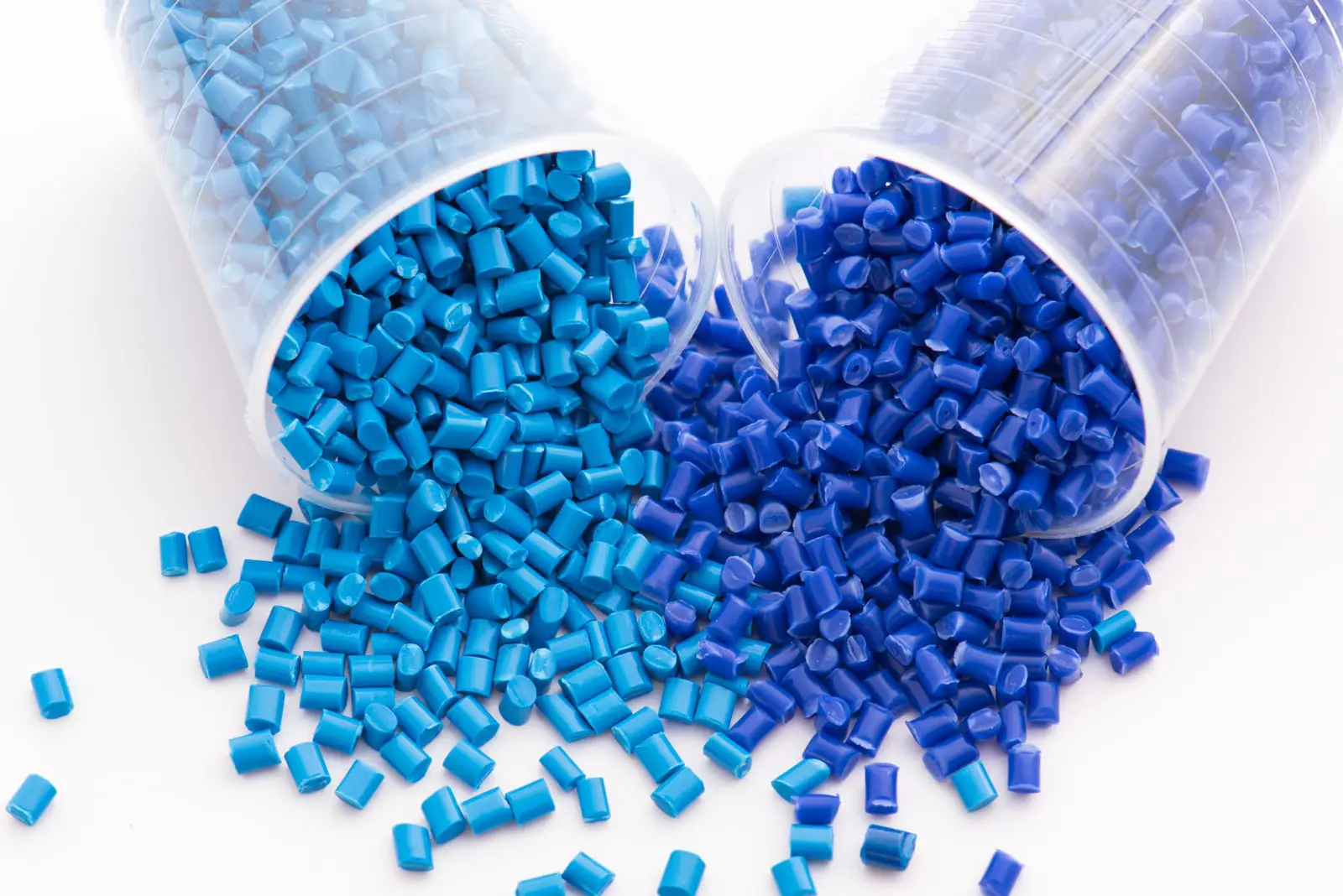
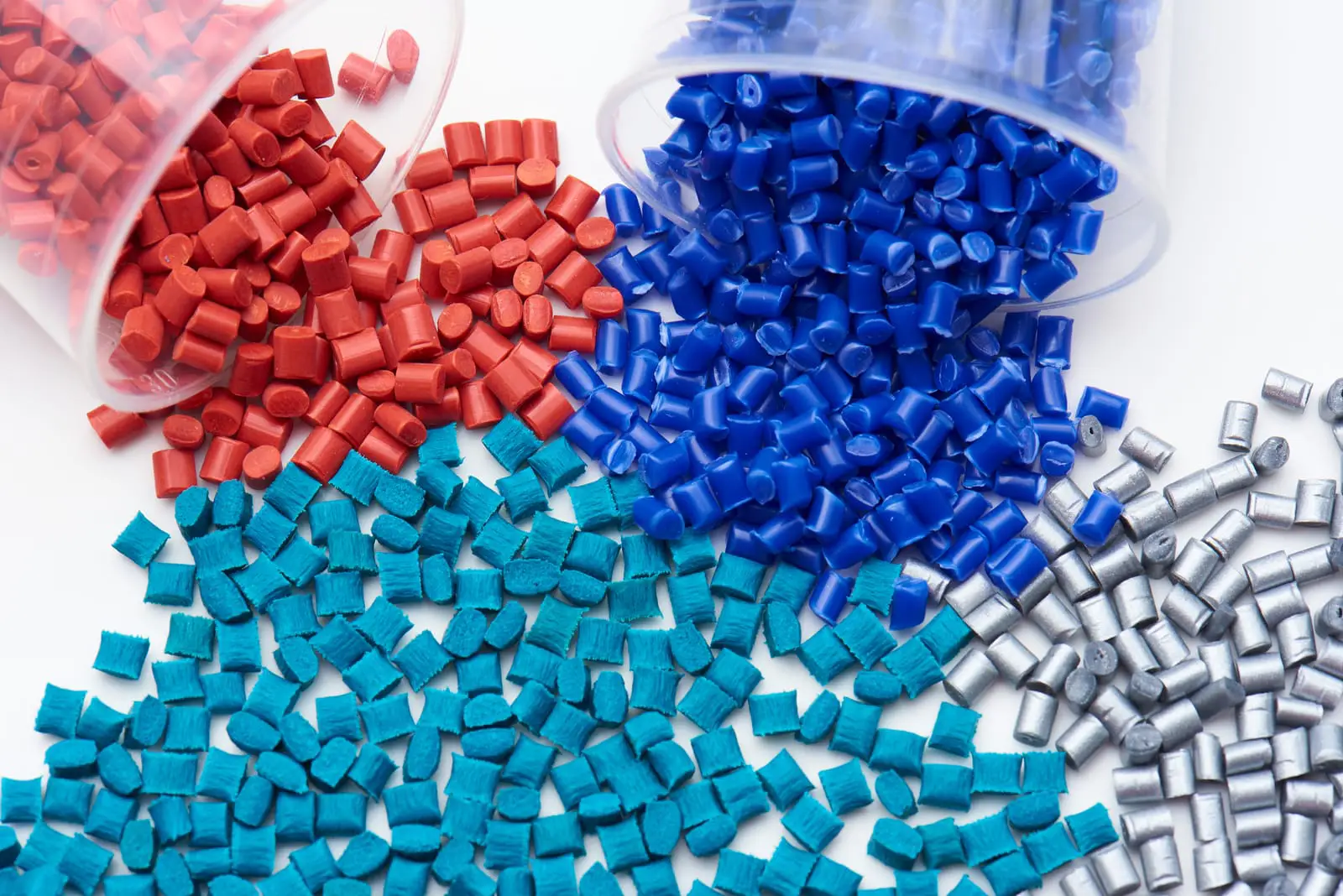
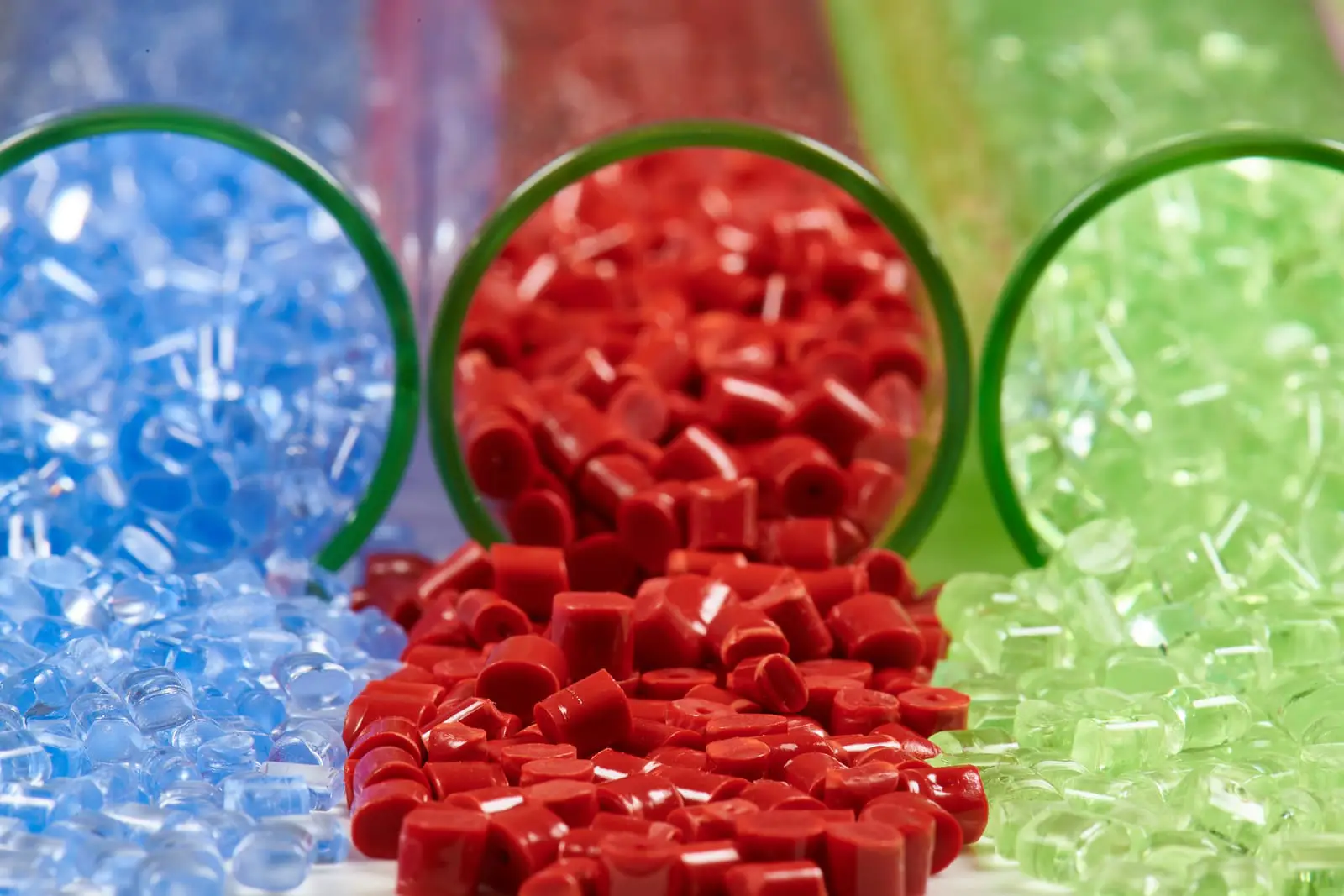
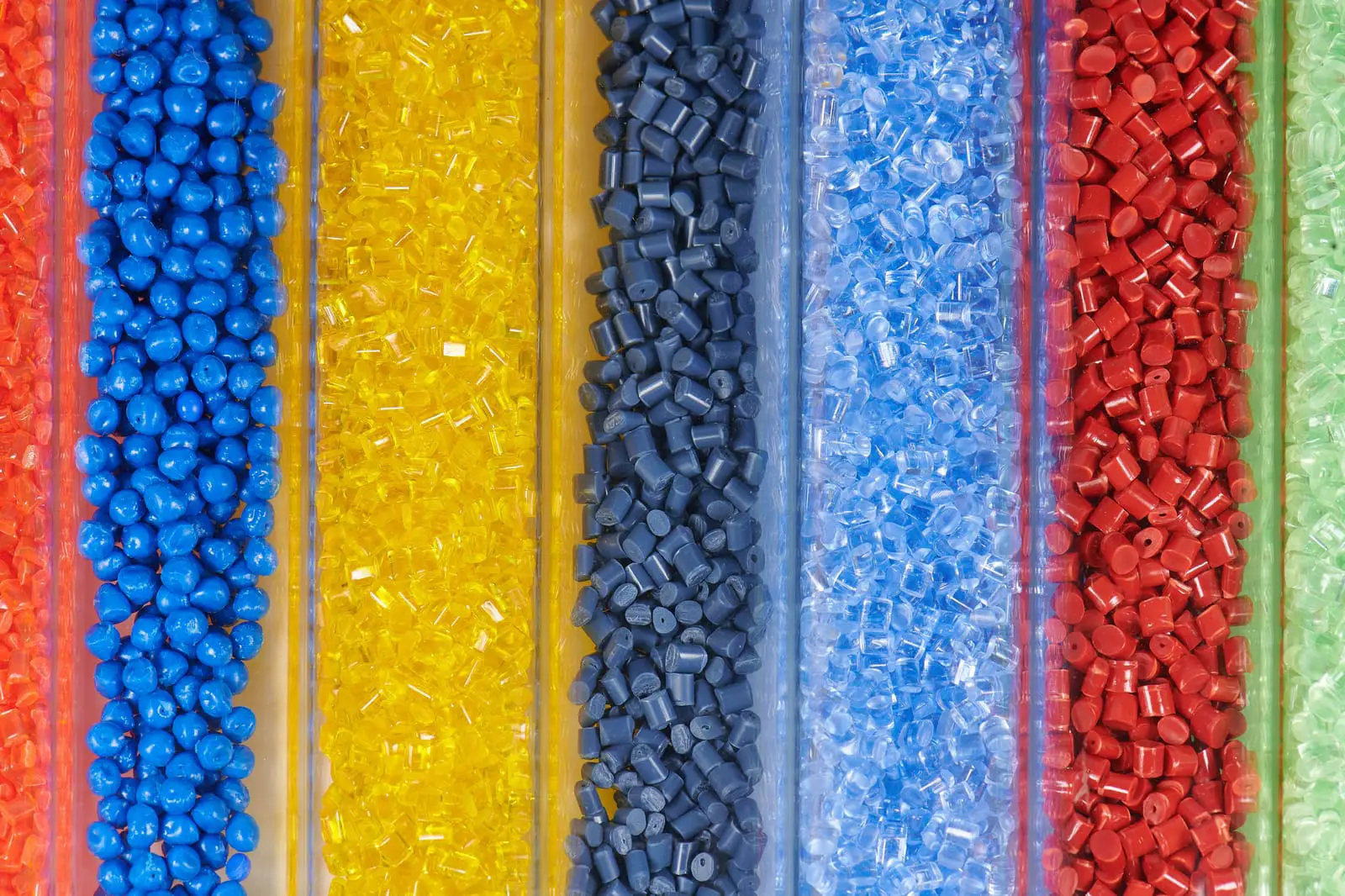
Masterbatch for nonwoven fabric adds color or function to the polymer before the web is formed, so every filament carries the same shade and properties. Able Materials is a nonwoven masterbatch manufacturer in China, formulating color and functional grades for PP and PET spunbond and staple-fiber lines. Each grade is built around the buyer’s polymer, line speed and web weight. It belongs to our wider fiber masterbatch range.
Nonwoven Processes We Formulate For
Spunbond nonwovens (PP and PET)
Spunbond lines extrude molten polymer through a spinneret, draw the filaments and lay them into a web that is thermally bonded. Masterbatch is metered into the extruder with the base resin. PP is the most common spunbond polymer, and PET spunbond is used where heat resistance or stiffness is needed. The carrier is matched to the base resin, so a PP carrier is used for PP and a PET carrier for PET. See our PET masterbatch page for polyester carrier detail.
Staple-fiber nonwovens — carded, needle-punched and spunlace
Here, color is added earlier, when the staple fiber is spun, cut and baled. The nonwoven producer then cards or needle-punches the fiber into a web, or bonds it by hydroentanglement (spunlace). The color must survive those bonding and finishing steps.
Meltblown and composite structures on project review
Meltblown and multilayer composites such as spunbond–meltblown–spunbond are reviewed case by case, because very fine filaments demand tighter dispersion.
Color Masterbatch for Nonwovens
Shade consistency across wide webs
A wide web shows shade variation quickly, across its width or along the roll. Stable feeding, even dispersion and a controlled let-down ratio keep the shade steady, and each lot is compared with the approved standard as a color difference (ΔE).
Opacity and coverage at low basis weights
Light webs let the background show through. Opacity comes from the pigment system, often titanium dioxide for whites and light shades, and from the loading level. Higher loading improves coverage but raises dispersion demands, so shade, opacity and spinning stability are balanced in the trial.
Functional Masterbatch Options for Nonwoven Fabric
Antibacterial nonwoven grades
Antibacterial grades build an antimicrobial additive into the filament. Test method and claim wording are reviewed per end use. See our antibacterial fiber masterbatch page.
Flame-retardant nonwoven grades
Flame-retardant grades suit furniture, automotive and technical nonwovens. The target standard is confirmed before formulation, and results apply to the tested web construction.
UV stabilization for agricultural and geotextile nonwovens
Covers, mulch fabrics and geotextiles sit in sunlight for long periods. UV-stabilized grades slow polymer degradation and color fading. See UV-resistant masterbatch for additive detail.
Antistatic grades for filtration and packaging nonwovens
Antistatic grades reduce static build-up on filtration media and packaging nonwovens, with target surface resistance agreed per project.
Processing Requirements on Spunbond Lines
Matching the carrier to PP or PET melt flow
Spunbond PP resins have a high melt flow rate so the polymer can be drawn into fine filaments. A carrier with a much lower melt flow can disturb the melt and produce uneven filaments. The carrier is chosen to sit close to the base resin’s melt behavior at the line’s processing temperature.
Dispersion, filament breaks and spin-pack pressure
Spunbond filaments are thin, and a single pigment agglomerate can break one. Poor dispersion also raises spin-pack pressure and shortens filter life. Spinning-grade dispersion and a filter pressure value (FPV) check protect line uptime.
Let-down ratio and dosing accuracy
The let-down ratio follows shade depth and additive loading. Dosing accuracy matters as much, since feeder drift appears as streaks or banding in the web. The buyer’s feeder type and accuracy range are part of the project review.
Typical Nonwoven End Uses
Industry requirements are covered on our hygiene and medical nonwovens page.
Hygiene and medical nonwovens
Spunbond layers for hygiene and medical products are often white or lightly colored, and extra documentation applies.
Agricultural covers and geotextiles
These need UV stability and consistent color over long outdoor exposure.
Filtration media and industrial wipes
Filtration and wipe nonwovens use masterbatch for color coding or antistatic behavior.
Automotive and furniture nonwovens
Needle-punched and spunbond layers in automotive trim and furniture need stable color and, in many programs, flame performance.
How Nonwoven Masterbatch Is Manufactured
Formulation and raw material selection
Formulation starts with the carrier resin, PP or PET, chosen for melt flow and compatibility with the buyer’s polymer. Pigments or additives are then selected for heat stability at the spinning temperature, dispersion behavior and, where relevant, the end-use requirement. PET carriers are dried before compounding.
Compounding and dispersion for fine filaments
Pigments and additives are melt-compounded into the carrier on a twin-screw extruder. Screw design, feed order and melt filtration are set so pigment particles are small compared with the filament diameter. For thin spunbond webs this is the main process control.
In-process testing before release
Each batch is checked against the approved standard for color difference (ΔE), melt flow, moisture (for PET) and dispersion by FPV. Batches outside the agreed limits are held back or reworked.
Packaging and batch traceability
Masterbatch is packed in moisture-protective bags, labeled with grade and batch number, and tied to the batch record. A reference sample is retained, so a roll-level issue can be traced back to its masterbatch lot.
Documentation and Regulatory Scope
TDS, SDS and COA
- TDS: carrier, recommended let-down ratio, processing window and storage guidance
- SDS: hazard and handling information for import
- COA per batch: color difference, melt flow, moisture and dispersion or FPV results
Our quality control page lists the checks applied to each batch.
Skin-contact and medical-use documentation reviewed per project
Hygiene, skin-contact and medical uses may call for composition declarations and third-party test reports. We review the required scope at the start of the project. No grade is described as certified or compliant until a report exists for that specific grade.
FAQ
What percentage of masterbatch is used in spunbond nonwoven?
Color masterbatch is commonly let down at about 1–5% by weight, depending on shade depth and pigment loading. White and functional grades may run outside this range. The final ratio is confirmed in a line trial.
Does masterbatch affect nonwoven softness or strength?
It can, if loading or dispersion is poor. High pigment loading or agglomerates can reduce filament strength and make the web feel harsher. Good dispersion and the lowest loading that reaches the shade limit this effect, and web properties are checked on the trial roll.
Does nonwoven masterbatch need drying before use?
PP masterbatch generally does not need drying beyond keeping it dry in sealed packaging. PET masterbatch does, and should be dried to the same moisture level as the PET chip. Wet PET causes viscosity loss and filament breaks.
Can masterbatch be used with recycled PP or PET in nonwovens?
Yes, but recycled resin varies in color and melt flow between lots. Validate the carrier and pigment system on your actual recycled feed, and expect shade correction when the source changes.
Can one masterbatch combine color and function?
Often, yes. A single masterbatch can carry a pigment and an additive such as UV stabilizer, which saves one feeder. The combination is tested for compatibility, because some additives shift the shade or interact with pigments.
Request a Nonwoven Masterbatch Quote
Send the following details for a nonwoven masterbatch quotation:
- Process: spunbond, staple fiber or composite, with line speed
- Base polymer and grade (PP or PET), including recycled content
- Web basis weight and filament diameter, if known
- Target color (physical sample, Pantone or RAL) and ΔE tolerance, and/or required function
- Applicable test standards and end-use requirements
- Trial quantity, expected annual volume, destination country and documents
Our technical team reviews feasibility and proposes a sampling route. Use the contact page to send your specification.