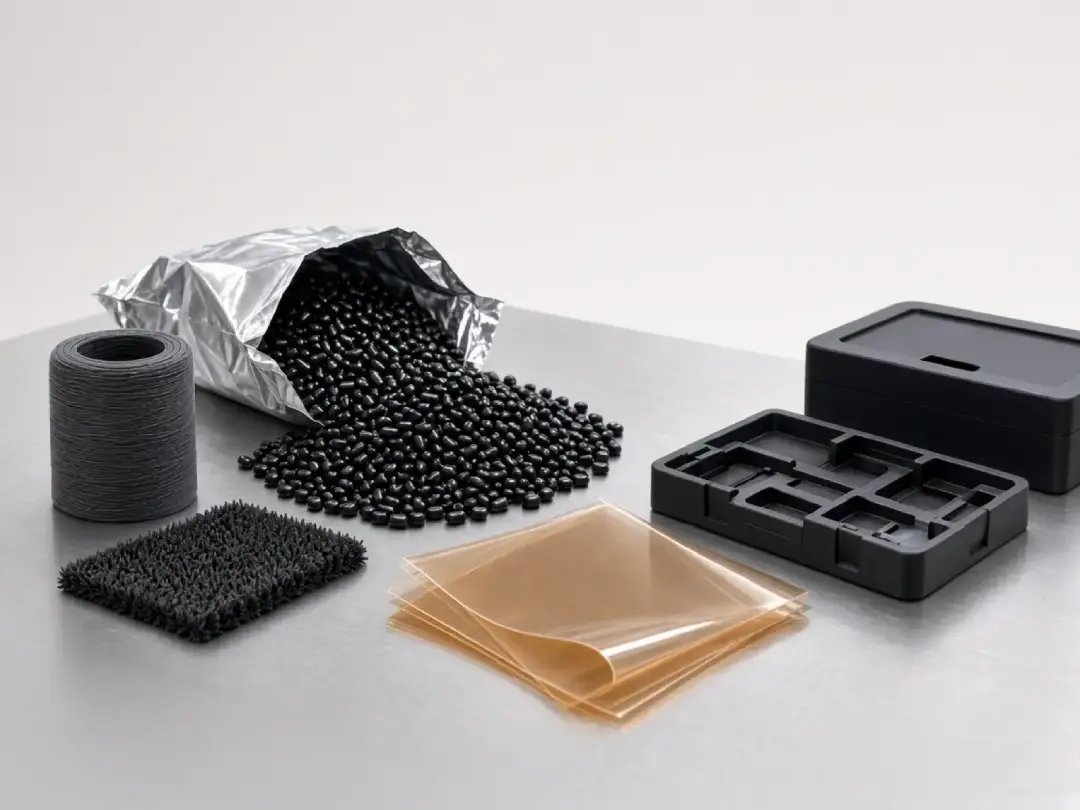
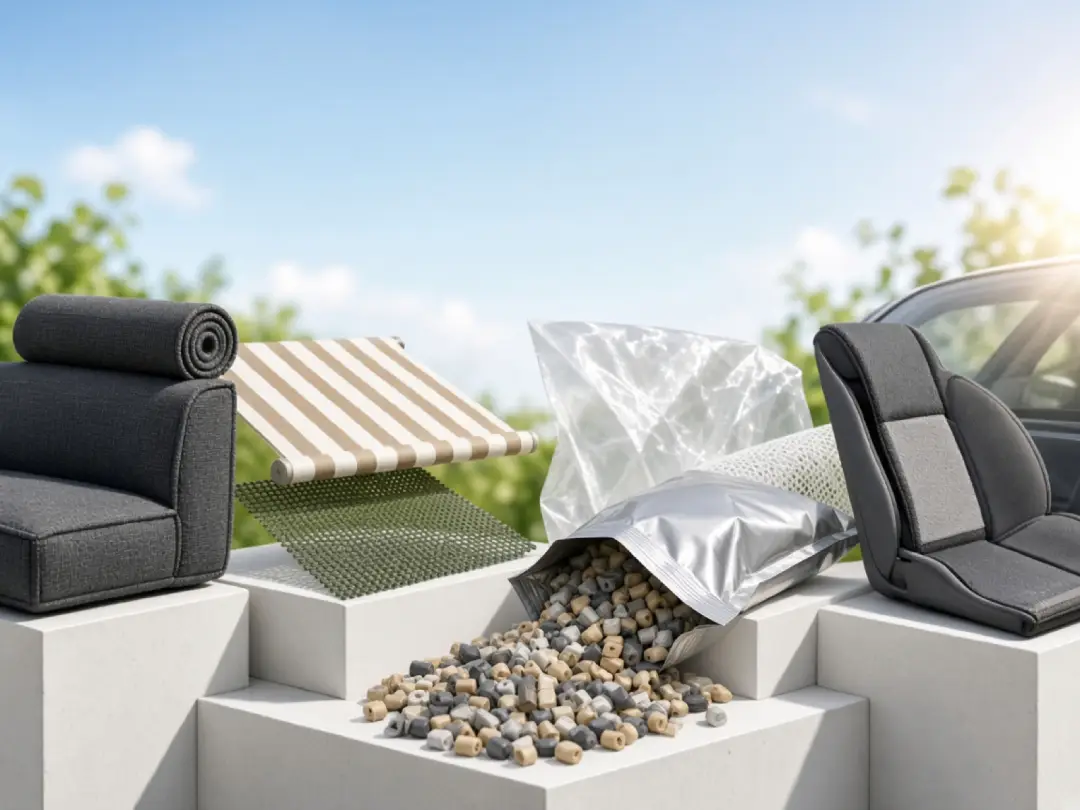
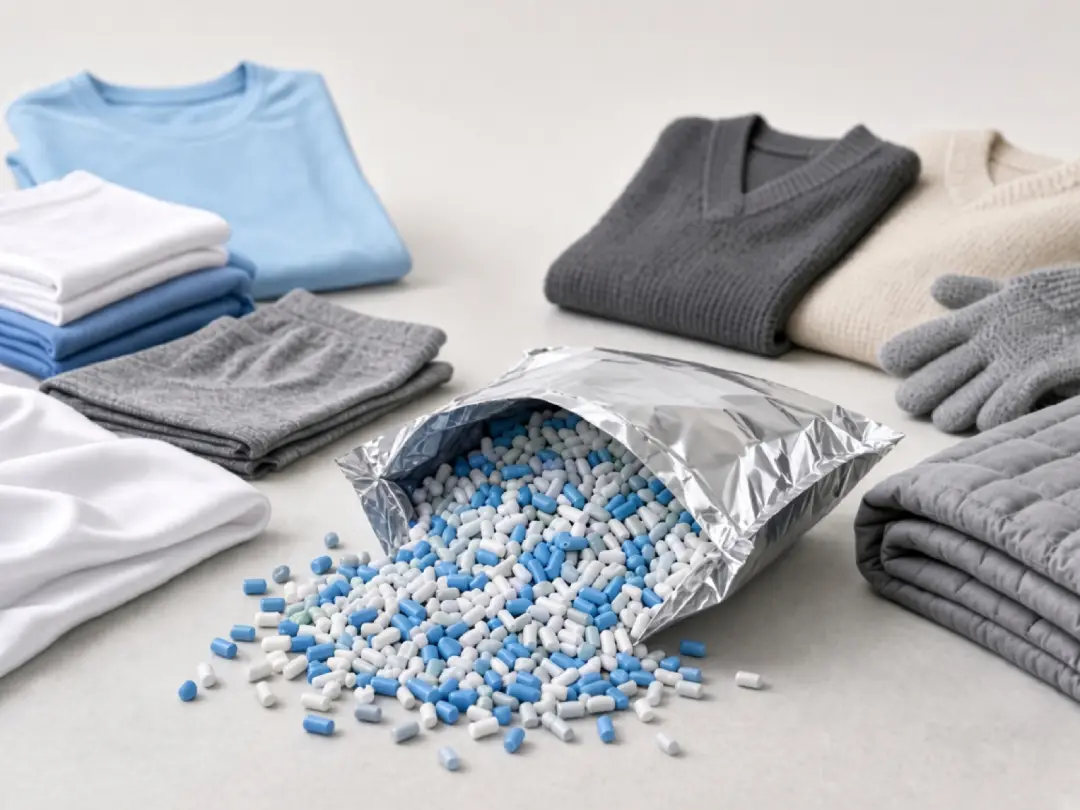
Cooling and far-infrared masterbatch places mineral or ceramic additives inside polyester or nylon during melt spinning, so the comfort property is part of the fiber and not a finish applied to the fabric. As a cooling fiber masterbatch manufacturer in China, Able Materials develops cool-touch, far-infrared and heat-retaining grades for apparel, bedding and technical textiles. Each grade is tied to a measurable fabric test, and the range belongs to our functional masterbatch portfolio.
Cooling (Cool-Touch) Masterbatch
How mineral additives raise contact-cool feel
Cool-touch fabrics feel cool because heat leaves the skin quickly at the moment of contact. Mineral additives with high thermal conductivity, such as certain oxide and mica-type powders, help the fiber draw heat away faster than plain polymer. The effect is a contact sensation. It does not lower body temperature, and it fades as the fabric warms to skin temperature.
Measuring cool touch (Q-max)
Q-max is the peak instantaneous heat flow when a warm plate touches the fabric. A higher Q-max means a cooler first-touch feel. It is measured on a thermal-sensing instrument under the agreed method, such as the KES-F7 principle or a national standard like GB/T 35263. The method, plate temperature and fabric conditioning are agreed with the buyer, because results are not comparable across methods.
How fabric construction affects results
Yarn alone does not decide the result. Fabric weight, knit or weave density, thickness, surface texture and finishing all change Q-max. A smooth, thin, dense knit gives a higher reading than a bulky, napped fabric made from the same yarn. For this reason, performance is verified on fabric knitted or woven from the trial yarn.
Far-Infrared Masterbatch
Ceramic additives and far-infrared emission
Far-infrared masterbatch uses ceramic powders, typically fine metal oxides, that absorb heat and re-emit it in the far-infrared band. The result is a higher emissivity in that band than plain polyester or nylon. The grade is described by its measured emissivity, and not by any effect on the body.
Emissivity test methods (e.g. GB/T 30127)
Far-infrared performance is tested on fabric, commonly under GB/T 30127, which covers normal emissivity and radiation-temperature rise. The method sets the reference temperature and the sample conditioning, and the reported values depend on both. The buyer’s chosen method is fixed before sampling.
Claim boundaries — material properties only, no health claims
We describe far-infrared grades only by measured material properties, such as emissivity under a named method. We do not support claims about circulation, pain relief, metabolism or other health outcomes. Claims on the finished garment remain the responsibility of the brand, and any wording should be backed by evidence for the market where it is sold.
Heat-Retaining Masterbatch
Mechanisms and fabric-level testing
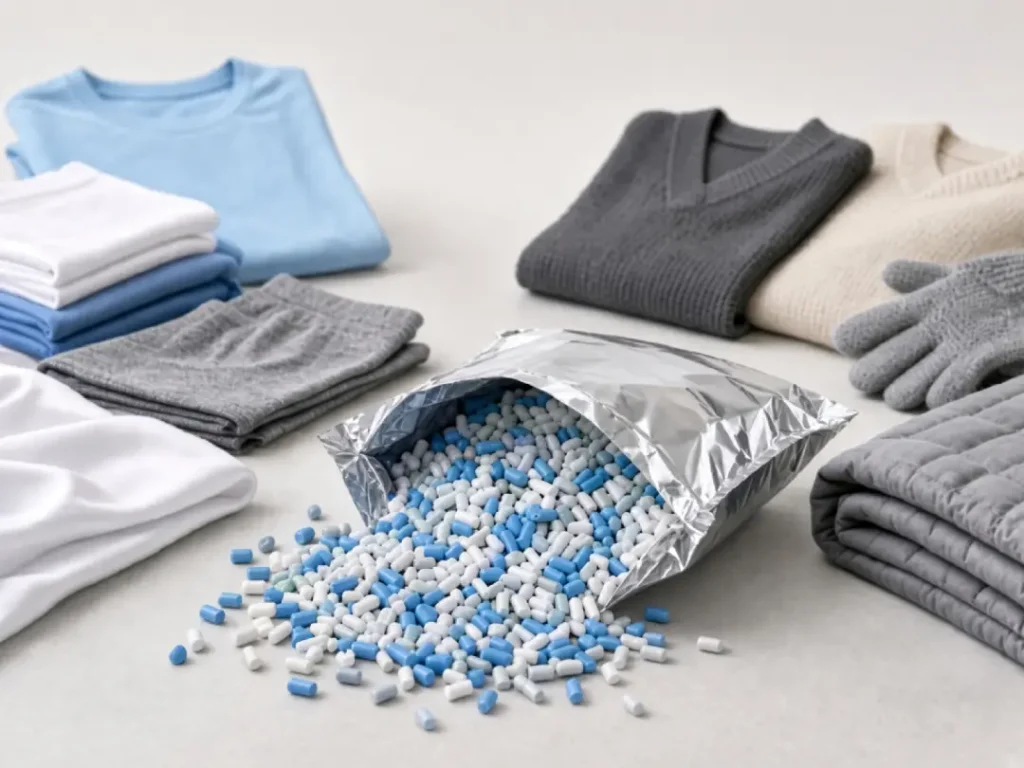
Heat-retaining grades use ceramic or mineral additives that absorb light and re-emit heat, or that reduce radiant heat loss from the fabric. Some work mainly under sunlight, and others rely on body heat. The mechanism and the test are chosen together. Fabric-level tests include thermal resistance and warmth retention, for example under ISO 11092 or GB/T 11048, and a temperature-rise test under a standard lamp. A fabric that is warmer in the lab is not automatically warmer to wear, because layering and fit also matter.
Supported Fibers and Processes
Polyester and nylon filament and staple fiber
PET and PA carriers are used for filament and staple fiber, on chip-fed and direct-spinning lines. Polyester carrier detail is on our PET masterbatch page and our polyester fiber masterbatch page. Mineral additives are loaded at a higher level than pigments, often several percent by weight, so loading is balanced against spinnability and tenacity.
Fine-denier spinning and dispersion
Fine-denier filament has little room for coarse particles. Large particles or agglomerates block spin-pack filters, raise the filter pressure value (FPV) and cause filament breaks. Mineral additives are also abrasive and can wear spinnerets and guides over time. We use fine, narrowly sized additives and melt filtration, and we run a trial at the buyer’s denier and speed before agreeing a loading. Cool-touch and far-infrared additives also affect luster and shade, usually making the fiber more matte, which is checked against the color target.
Applications
Summer apparel, sportswear and bedding
Cool-touch yarn is used in T-shirts, activewear, sleepwear and summer bedding such as sheets and mattress covers, where the first-touch feel is a selling point. The yarn is often blended with other fibers, and the Q-max target is checked on the finished fabric.
Winter wear and thermal textiles
Heat-retaining and far-infrared yarns are used in base layers, knitwear, gloves and thermal bedding. Wider technical-textile context is on our technical textiles page. Outdoor and sun-exposed products can also use a UV stabilizer, as described on our UV resistant masterbatch page.
How Cooling and Far-Infrared Masterbatch Is Manufactured
Formulation and raw material selection
The carrier is PET or PA, chosen to match the fiber polymer’s melt flow. The mineral or ceramic additive is selected for particle size, purity, thermal stability at the spinning temperature and its effect on color. PET and PA carriers are dried before compounding.
Compounding and dispersion of mineral and ceramic additives
The additive is melt-compounded into the carrier on a twin-screw extruder. At high loading, the main controls are stable feeding, de-agglomeration of fine powders and screw wear. Screw design and melt filtration are set to give even dispersion with no coarse particles.
In-process testing before release
Each batch is checked against the approved reference for melt flow, moisture, filter pressure value (FPV) and, for colored grades, color difference (ΔE). Mineral content is checked by ash content or thermogravimetric analysis where the method suits the grade. Q-max and emissivity are tested on fabric, not on pellets.
Packaging and batch traceability
Masterbatch is packed in moisture-protective bags and labeled with grade and batch number. The batch record is tied to the COA, and a reference sample is retained for traceability. Batch checks are described on our quality control page.
Documentation and Order Options
TDS, SDS, COA and fabric test reports
- TDS: carrier, recommended let-down ratio, processing window and storage guidance
- SDS: hazard and handling information for import
- COA per batch: melt flow, moisture, dispersion or FPV, and color difference where relevant
- Fabric test report: Q-max or emissivity result under a named method, available for a specific grade and fabric
Wider regulatory scope, including REACH and RoHS declarations on request, is outlined on our compliance page.
Lab sample, trial order and production stages
Work normally runs in three stages: a lab sample for a small spinning trial, a trial order of about 100 kg for line testing, and a production order once yarn and fabric results are approved. The fabric tests are scheduled early so the target value is confirmed before volume is committed.
FAQ
Does cooling fiber make the wearer cooler?
It changes how the fabric feels at first touch, which is measured as Q-max. It does not lower skin temperature, and the effect is short once the fabric warms up. Sweat management, breathability and fabric construction have a larger effect on comfort during wear.
Does the cooling effect last after washing?
Because the additive sits inside the fiber, it does not wash out the way a coating can. The fabric still changes with wear, and finishes or softeners can mask the surface feel. Wash durability is tested by measuring Q-max again after the agreed number of wash cycles.
How much cooling masterbatch is added to the fiber?
Loading is higher than for color masterbatch, usually several percent by weight, and depends on the additive and the Q-max target. A higher loading can lower filament strength and spinnability, so the level is set in a spinning trial and confirmed on fabric.
Can cooling or far-infrared masterbatch be used with dope-dyed color?
Yes. Color and function can be run together or separately, then tested as a system. Mineral additives can lighten or dull the shade, so the color target is checked on trial yarn. See our dope-dyed fiber masterbatch page for the color side.
Is far-infrared fabric allowed to be marketed with health claims?
Health and medical claims carry a high bar for evidence and differ by market, and we do not supply grades with such claims. Emissivity can be reported as a measured property. Brands should seek their own regulatory advice before using any wellness wording.
Request a Cooling or Far-Infrared Masterbatch Quote
Send the following details for a cooling or far-infrared masterbatch quotation:
- Fiber polymer and grade (PET, PA6, PA66 or other), including recycled content
- Spinning process, denier and filament count
- Function needed (cool-touch, far-infrared or heat-retaining), with the target test method and value
- Fabric construction and end use, if known
- Color reference (physical sample, Pantone or RAL) and ΔE tolerance
- Trial quantity, expected annual volume and required documents
Our technical team reviews feasibility and proposes a sampling route. Use the contact page to send your specification.