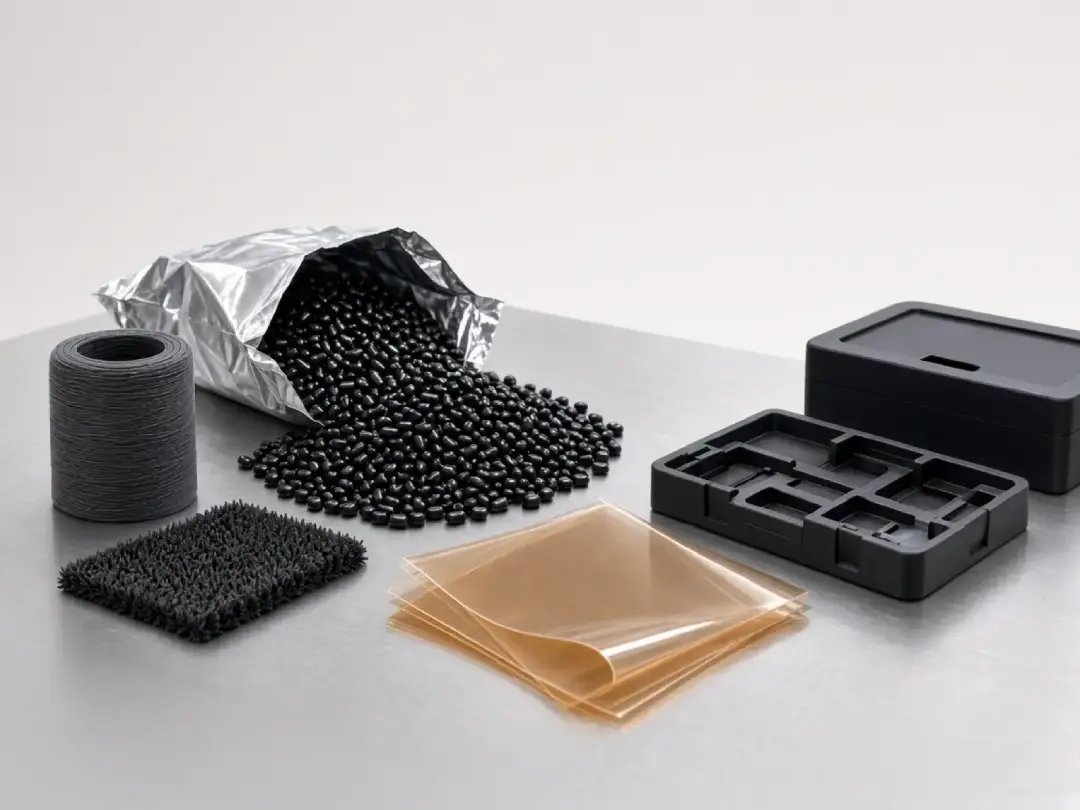
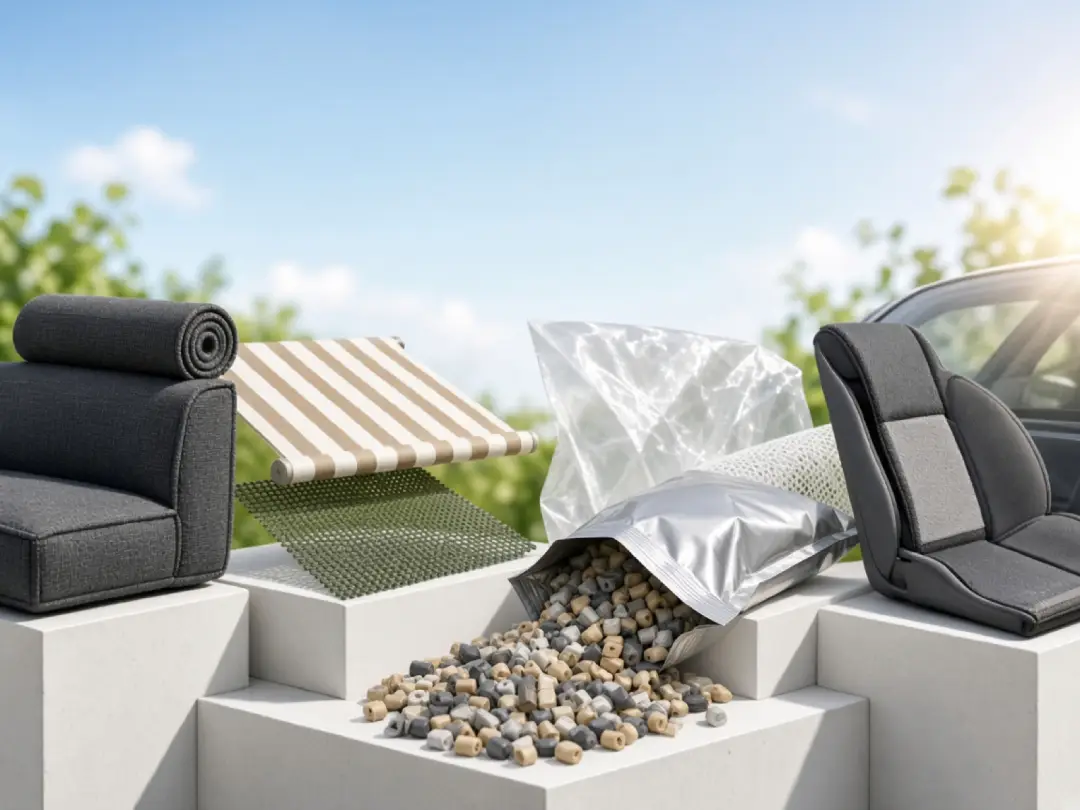
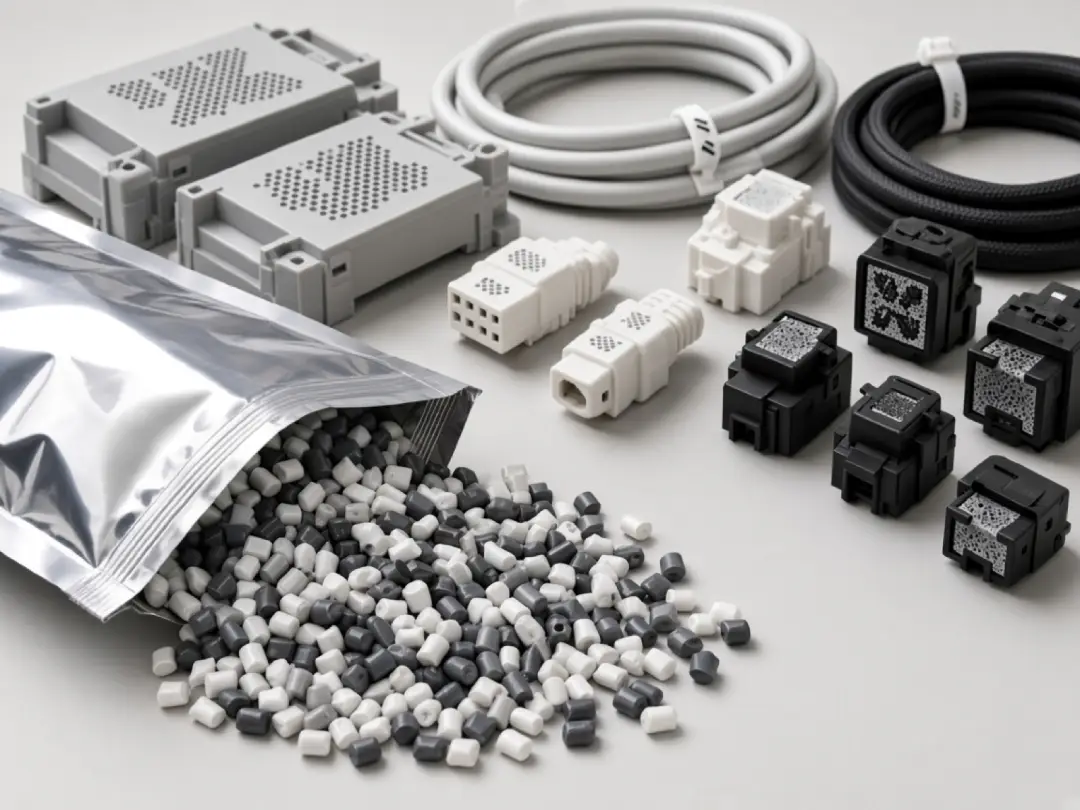
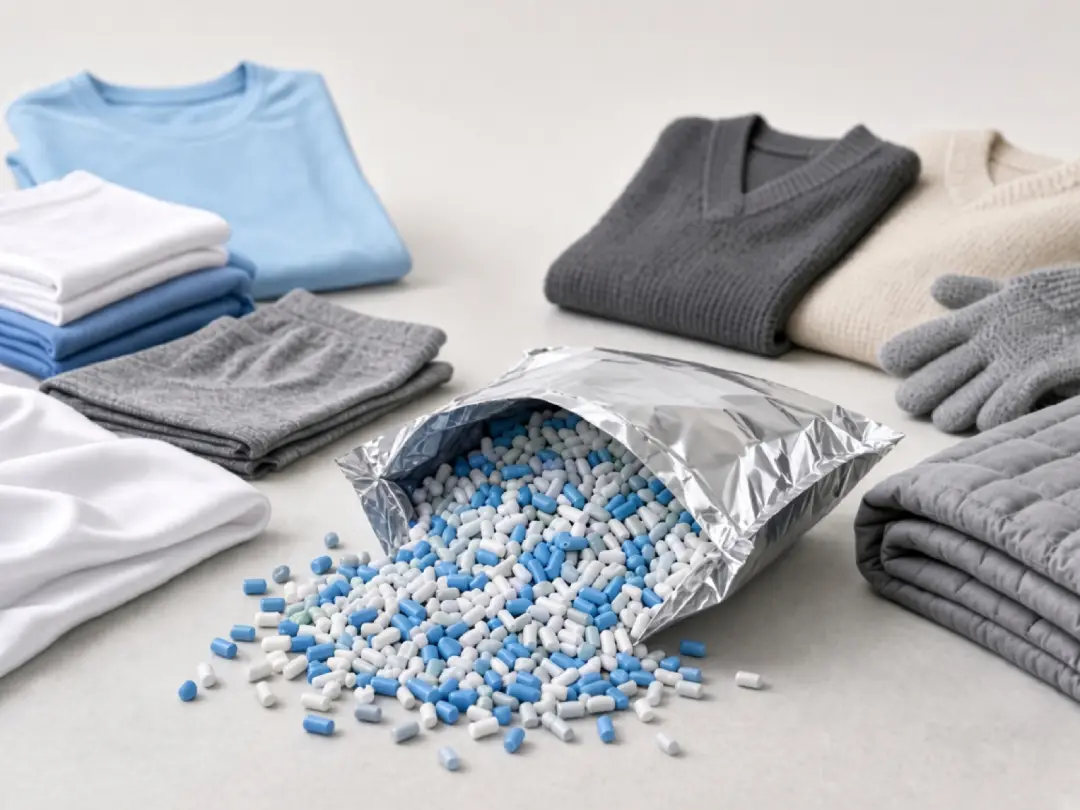
Laser marking masterbatch is a concentrate that makes a plastic respond to a laser, so a code, logo or serial number can be marked without ink, labels or pad printing. As a laser marking masterbatch manufacturer in China, Able Materials develops laser-markable grades for molded parts, wire and cable, and other plastics. Each grade is matched to the polymer, the laser type and the contrast the buyer needs, and sits within our functional masterbatch range.
How Laser-Markable Plastics Work
Most plastics absorb little energy at common laser wavelengths, so an unmodified part marks poorly or not at all. A laser additive absorbs the beam and converts it to local heat or a chemical change in a very thin surface layer. The mark is therefore part of the material and does not sit on top of it.
Dark marks on light parts (carbonization)
The additive absorbs laser energy and the surrounding polymer chars at the surface. This gives a dark mark on a white, grey or light-colored part. It is the most common route for identification codes and gives good contrast on light parts.
Light marks on dark parts (foaming)
On a dark part, the laser heats the polymer until it forms tiny gas bubbles at the surface. These bubbles scatter light and give a pale mark. Foaming suits polymers such as PA, PC and ABS, and the result is sensitive to laser power and speed.
Color-change marking
Some additives change color under laser energy, for example from light to dark, without charring or foaming the surface. This gives a smooth mark with little surface change. The available contrast and color depend on the additive and the base polymer.
Matching the Additive to the Laser
Fiber and Nd:YAG lasers (1064 nm)
Fiber lasers and Nd:YAG lasers operate at 1064 nm and are the most widely used for plastic part marking. They are fast and compact, and most additives for dark marks and foaming are designed for this wavelength.
CO2 and UV lasers
CO2 lasers operate at about 10.6 µm. Many polymers absorb at this wavelength on their own, so an additive is not always required, but it can help contrast and consistency. UV lasers, around 355 nm, mark with little heat and suit fine detail on heat-sensitive parts. They need an additive that absorbs in the UV range.
Mark contrast, edge sharpness and marking speed
Three results are balanced against each other:
- Contrast: how clearly the mark stands out from the part
- Edge sharpness: how well fine lines and small codes stay readable
- Marking speed: how quickly the mark is produced on the line
Higher loading or more laser energy can raise contrast but may blur edges, burn the surface or slow the process. The best setting is found in a marking trial on the actual part.
Supported Polymers
PA6 and PA66
PA6 and PA66 are the primary polymers for our laser-markable grades. They respond well to both carbonization and foaming routes, and they are widely used for connectors, cable ties and electrical housings. Glass-filled grades can be reviewed, and the filler is taken into account during development. Nylon engineering parts are described further on our PA masterbatch page.
PP, PE, PBT, ABS and PC on project review
Other polymers can be developed, but the result depends heavily on the resin. PP and PE are harder to mark with strong contrast, and PBT, ABS and PC need an additive matched to the resin and laser. These polymers are handled on project review, and a marking trial is run on the buyer’s resin before supply is agreed.
Applications
Part identification and traceability codes
Laser marking is used for serial numbers, batch codes, QR codes and Data Matrix codes. These marks are part of the surface, so they resist rubbing and cleaning better than a label. Code readability is verified on the final part, with the buyer’s scanner or a code-grading method such as ISO/IEC TR 29158.
Wire, cable and connectors
Cable jackets and insulation are marked at speed for length, type and batch identification, and connectors and cable ties are marked with part numbers. The marking additive must withstand extrusion temperatures and must not affect the electrical or mechanical properties of the jacket. Grade, carrier and loading are reviewed against the cable specification.
Automotive and electrical components
Housings, sensor parts, switches and relays carry marks for traceability and regulatory identification. Sector requirements are reviewed per project, and more context is on our electrical and electronics page.
How Laser Marking Masterbatch Is Manufactured
Formulation and raw material selection
The carrier is matched to the target polymer, such as PA, PP, PE or PBT, so that the concentrate melts and blends cleanly into the base resin. The laser additive is selected by the laser wavelength, the mark type and the thermal stability needed at the processing temperature. Hygroscopic carriers, such as PA, are dried before compounding.
Compounding and dispersion of laser additives
The additive is melt-compounded into the carrier on a twin-screw extruder. Laser additives are fine particles, and uneven distribution produces patchy marks with variable contrast. Screw design, feeding stability and melt temperature are set to give uniform dispersion without degrading the additive or the carrier.
In-process testing before release
Each batch is checked against the approved reference for melt flow, moisture and, for colored grades, color difference (ΔE). Where a suitable method exists, additive content is also checked. A marking test is then run on a molded plaque with fixed laser settings, and the mark is compared to the approved reference for contrast and edge definition.
Packaging and batch traceability
Masterbatch is packed in moisture-protective bags and labeled with grade and batch number. The batch record is tied to the COA, and a reference sample is retained for traceability. Batch checks are described on our quality control page.
Combining Laser Marking with Color
How pigments affect mark contrast
Pigments change how the part absorbs and reflects laser light. Titanium dioxide, carbon black and other pigments can raise or lower contrast, and the same additive can give different results in different colors. Color and laser additive are therefore developed together, which our custom color masterbatch team can run in one trial. Where the part also needs static control, see the antistatic and conductive masterbatch page.
Testing marks on the final part
Marking results depend on part geometry, wall thickness, surface texture and filler content. For this reason, we recommend a marking trial on molded parts or cable from the buyer’s own process, and not on a lab plaque alone. The laser type, power, frequency and speed are recorded so the result can be repeated in production.
FAQ
Is laser marking permanent?
A laser mark alters the material surface, so it does not wipe off and generally survives handling and cleaning better than printed marks. Durability still depends on the polymer, the mark type and the environment, such as abrasion, chemicals and weathering. It should be tested under the conditions of use.
How is laser marking different from inkjet or pad printing?
Printing deposits a layer of ink on the part and needs consumables, drying and in some cases pre-treatment. Laser marking uses no ink and can change the code by software. The trade-off is that the plastic must contain a suitable additive or absorb the laser by itself.
How much laser marking masterbatch is needed?
Laser additives are usually used at a low let-down, but the exact level depends on the polymer, the color and the contrast required. It is set in a marking trial and confirmed on the final part, and not taken from a general rule.
Does laser marking masterbatch affect part strength?
At low loading the effect is usually small, but it depends on the additive and polymer. Strength, impact and, for electrical parts, insulation behavior can be checked on trial parts against the buyer’s specification.
Can a transparent or white part be laser marked?
Yes, in many cases. Transparent and white parts can be marked with an additive matched to the laser, though contrast and mark depth differ from those on colored parts. The result is confirmed by a marking trial.
Request a Laser Marking Masterbatch Sample
Send the following details for a laser marking masterbatch sample or quotation:
- Base polymer and grade (PA6, PA66, PP, PE, PBT, ABS, PC or other), including fillers such as glass fiber
- Product form and process (injection molding, cable extrusion or other)
- Laser type, wavelength and power range, if known
- Mark type needed (dark on light, light on dark, color change) and minimum contrast or code grade
- Part color and wall thickness
- Trial quantity, expected annual volume and required documents
Our technical team reviews feasibility and proposes a sampling route with a marking trial. Use the contact page to send your specification.